IP PBX sizing
IP PBX, EPABX and PABX: the three terms explained
On this page
- Three names, one function — what should you know?
- What changes when the exchange becomes IP — what should you know?
- Mapping the old expectations onto published figures — what should you know?
- What the IP exchange adds that the old one could not — what should you know?
- How to choose, in the order that matters — what should you know?
- What to put in the brief
Three names, one function — what should you know?
PABX stands for private automatic branch exchange: an automatic switch that gives an organisation internal extension numbers and connects those extensions to outside lines. It is the oldest of the three terms, and it survived from the era of electromechanical and then digital exchanges.
EPABX is the same thing with "electronic" at the front. The term is used mainly in India and South Asia, where a generation of exchanges - from manual boards through analog and digital EPABX units - was installed in offices, hospitals, hotels and campuses. It describes a function, not a maker or a technology, which is why the honest answer to "what is an EPABX today" is: it is a telephone exchange, and the current implementation of that function is an IP PBX.
An IP PBX is the same private exchange with the switching done in software and the telephony carried as SIP over the data network. The difference that a buyer feels is not the acronym; it is that extensions stop being physical ports and become accounts.
What changes when the exchange becomes IP — what should you know?
- Extension count stops being a wiring problem. This range publishes no maximum number of IP extensions for any model - we have written about that omission elsewhere - while a conventional exchange's extension count was exactly the number of ports in the cabinet.
- Positions can be anywhere. A remote extension is a registration, and the platform's NAT traversal service is documented as the preferred way to reach the PBX from outside, with port mapping as the alternative.
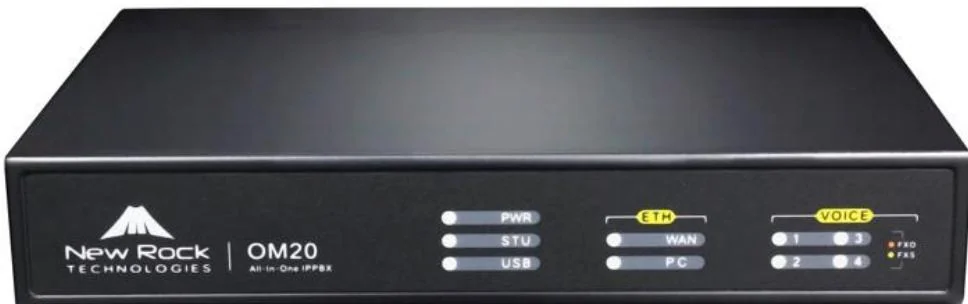
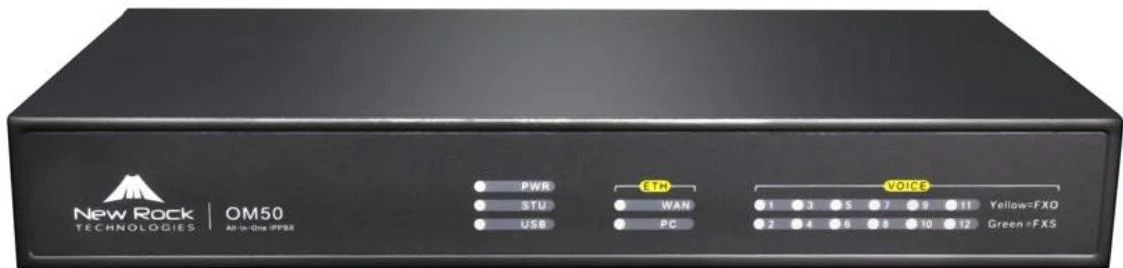
- Trunks become accounts. Published maximum SIP trunks are 24 on the OM20G, 62 on the OM50G, 216 on the OM80E, 496 on the OM200G and 1000 on the OM1000-UC, each carrying up to 120 concurrent calls - 200 on the OM1000-UC.
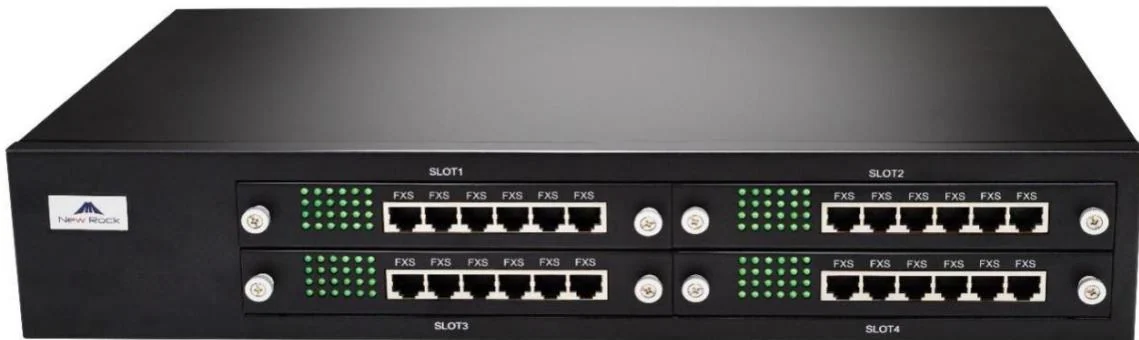
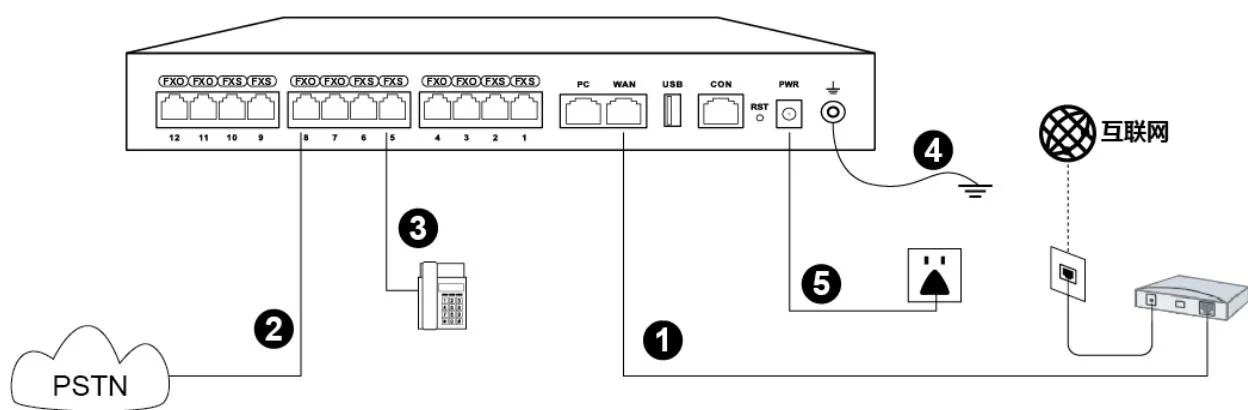
- Analogue devices stay possible. Analog ports are still published per model: up to 4, 12, 48 and 96 respectively, and none on the OM1000-UC.
The platform's own positioning is the "multifunctional business office telephone system" for small, medium and large enterprise branches, integrating VoIP, voice, fax and recording, and it names compatibility with CallManager, Broadsoft, Skype for business, Huawei IMS and Asterisk.
Mapping the old expectations onto published figures — what should you know?
Most EPABX and PABX briefs were written around features that still exist, just under new names. This is the translation table.
| What the old brief asked for | What it is on an IP exchange | Published figure |
|---|---|---|
| Extension numbers | Extensions created in batches, numbered from 200 | Batches, with the numbering scheme set at configuration |
| Operator's console | An operator position on extension 200, answering up to 5 numbers | Calls fall to the operator after 24 seconds; the queue holds 10 waiting calls |
| Transfer and hold | Six transfer variants, hold and park, three-way calling | Hold and park come with hold enabled; three-way is default with hold |
| Group pickup | Department pickup groups | Up to 32 departments |
| Outgoing restrictions | Five permission levels per extension, plus barring by weekday and time band | Internal only, local, domestic (default), international, barred |
| Least-cost routing | A routing table with number translation and directed routing | 500 entries, applied top to bottom |
| Voicemail | Message store retrieved from the extension | Dial *98; files are named by the codec in use |
| Call logging | Call detail records pushed to an external server | Port 1809 by default |
What the IP exchange adds that the old one could not — what should you know?
- DID, done properly. An outside number can be bound to an extension or a group and bypass the auto attendant entirely, so a caller reaches a person instead of a menu. On the OM1000-UC the manual gives DID/DOD its own chapter, with up to four outside numbers per extension or group.
- Ring groups with published limits. Sequential, rotating or simultaneous ringing, up to 40 members on the OM20G and OM50G and 60 on the larger models, with a queue of up to 20 waiting calls and a prompt for the caller.
- Recording, with an honest constraint. Recording runs in G.711 and G.729 only. The OM20G and OM50G record locally as well as to a server; the larger models record only to a server, on port 1311 by default.
- An API. With the API enabled, third-party applications can pull call records and room status - which is how a hotel PMS or a call-accounting system connects.
- Multi-site numbering. Two published schemes: network-wide unique extension numbers, or repeatable numbers distinguished by a site prefix for head-office and branch management.
How to choose, in the order that matters — what should you know?
- Outside lines first. Count simultaneous outside calls at the busiest hour. That figure is far smaller than the extension count and it sets the trunk number.
- Analog devices second. Fax, lift, alarm and any handset that must work without a network need physical ports; only four of the five models have them, and the ceiling climbs from 4 to 48 to 96.
- Positions third. Count every place a handset, console or softphone has to ring, including door stations and warehouse handsets.
- Availability and recording fourth. Only the OM1000-UC pairs two units in dual hot standby; local on-box recording exists only on the OM20G and OM50G.
- Then the wiring. If the pairs in the wall are in good condition, they decide between a 2-wire retrofit, analog ports, or new structured cabling - not the exchange's acronym.
What to put in the brief
Skip the acronym debate and write five lines: the number of positions, the number of simultaneous outside calls at the busiest hour, every analog device that has to survive, whether recording is required and where it may live, and whether more than one site is involved. Those five answers choose the model, the card mix and the trunk count directly from published capacities. Add the condition of the existing cabling and the list of outside numbers to keep, and a supplier can quote without guessing.