Skip to content

Scenarios · lifts and vertical transport

Elevator Intercom Systems — the emergency chain from the lift car to the desk that answers

An elevator intercom is a life-safety communication chain, and it is judged by one question: if the lift stops between floors, can the person inside speak to someone who can act, and does the equipment still have power when it matters. The design documented here puts the car, the car top, the pit, the machine room and the monitoring desk on one IP and SIP system, over the two or four cores the travelling cable already provides where that is possible. Compliance is the deciding factor in this scenario, not the audio quality, so the page sets out what a compliant design has to answer and which determinations belong to the lift contractor and the local code authority. NEXVIA designs, manufactures, supplies and commissions the system; the terminals and gateways are manufactured by NEXVIA.

  • All six lift positions on one chain: car, car top, car pit, machine room, management office and monitoring centre
  • A 2-wire or 4-wire IP elevator intercom gateway (EIM-01) is the solution material own label for the travel-cable route
  • PN1 carries network and power over an existing two-core pair, up to 1600 m for the network function without power
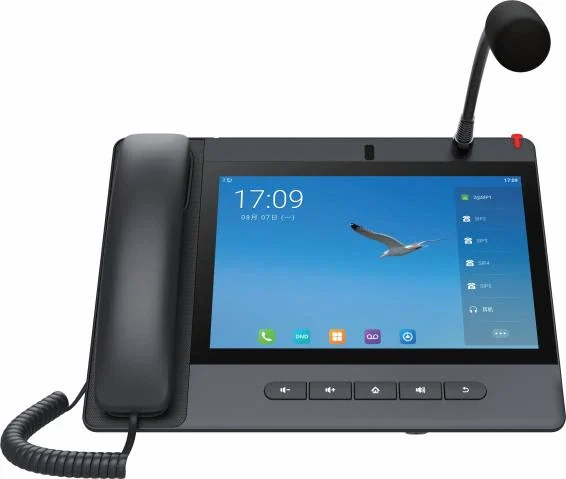
  • The answering position is a console with a log: A320i or A330i, on the same PBX as the site telephones
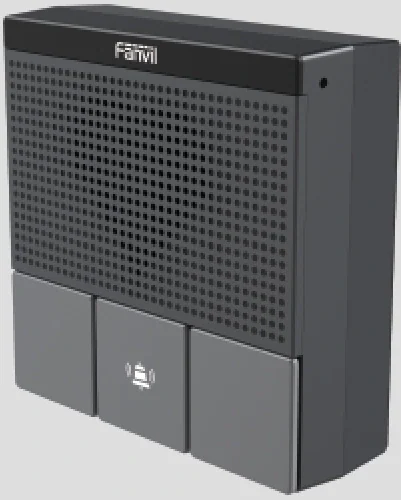
  • Talkback positions use models that publish talkback — the A212 wall speaker and the FH-S01 ceiling speaker both carry a microphone
  • The maintenance technician carries a portable handset, so a call can be answered from the pit or the car top
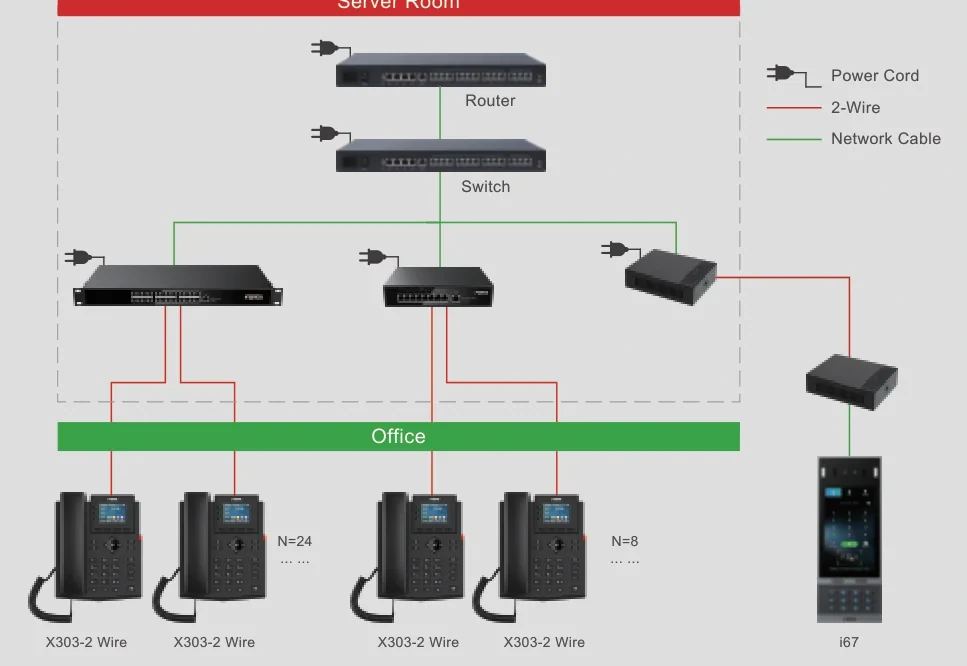
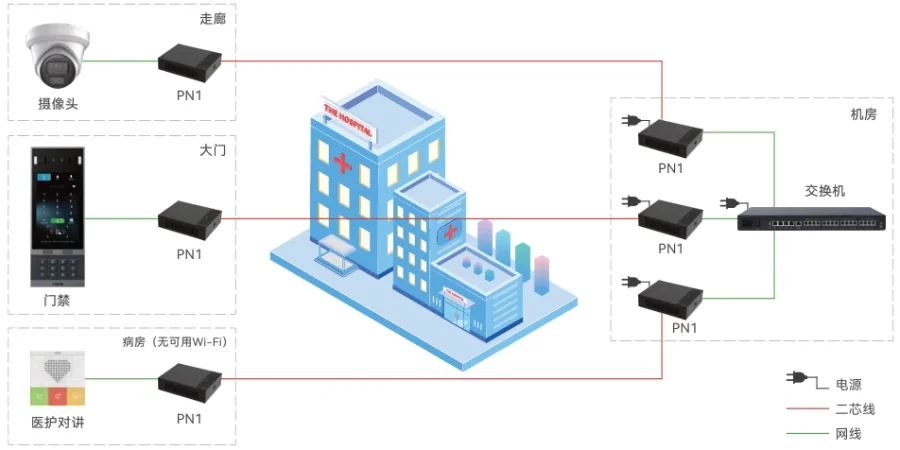
Two-core wiring topology used for lift intercom and retrofit positions

The short answer

Count six positions, not one: the lift car, the car top, the pit, the machine room, the management office and the monitoring centre. That is the six-party arrangement the solution material names for a 2-wire or 4-wire IP elevator intercom gateway (EIM-01), and it is the list to take to a survey: every one of the six is a device, a call route and, where the code requires it, a power arrangement.

The cabling question comes before the equipment question. Where the travelling cable has spare cores, the documented route is the 2-wire or 4-wire technique: the PN1 converter carries network and power over an existing two-core pair and reaches up to 1600 m for the network function without power, supplied at AC 100–240 V, while the PN8 and PN24 switches distribute up to 8 and up to 24 two-wire devices at a maximum connection distance of 300 m for network plus power. Where no spare core exists, the design has to change — not the claim.

The answering side is ordinary telephony, which is what makes the chain testable. A call from the car rings a manned position — an A320i console with 20 SIP lines, up to 116 DSS keys and up to 100 connected devices, or an A330i desk with an RS-485 interface for building signals — and the PBX behind it publishes 24 to 1000 SIP trunks. Prices are not published on this site; the scope is quoted per lift, per position count and per travel-cable condition.

Two-core topology: network and power carried over the cabling already in the wall

What goes wrong on this type of site

The travelling cable is the bottleneck

Everything in a lift intercom design runs into the same question: how many spare cores the travelling cable has and what the lift contractor will allow on them. The documented answer for two cores is the 2-wire technique; where no core is available, the design has to change, and that is a conversation with the lift contractor rather than a product selection.

Nobody is sure who answers

The chain is only as good as its answering position. A manned desk with a console that logs the call, a nominated out-of-hours number and a tested escalation order are what make the system work at 3 a.m.; an unstaffed office with a ringing phone is the failure mode this design has to remove.

Power when the building is dark

The emergency call has to survive the failure that caused the entrapment. The published supply arrangements for the equipment are explicit, but which of them the code requires on a given site is not a product decision — it is agreed with the lift contractor and the code authority, and it is written down.

Six positions, one of them occupied by a lone worker

The pit and car top are where a maintenance technician works alone. The same chain that serves the public in the car serves that technician, and a portable handset such as the W611W keeps the same extension numbers in the technician hand while the fixed positions stay installed.

Choosing by size

Size bandSystemDevicesNotes
Single lift in a small building — up to 4 stopsOM20G — 24 SIP trunks; 4 analog ports if an existing lift line is keptCar station, pit or car-top station, 1 machine-room station, 1 answering phone at the office; 2-wire or 4-wire link per the travelling cableThe OM20G is the only model that can dial out through a 3G/4G USB modem, which matters at a site whose lift line has no wired path. Ring groups hold up to 40 extensions.
Two to four lifts in one buildingOM50G — 62 SIP trunks; up to 12 analog ports across 3 interface cardsOne station per car, per car top, per pit and per machine room, with a shared answering position and a per-lift extension numberKeeping one extension per lift is what lets the person answering know which car is calling without relying on a spoken floor number. Confirm the position list on the quotation.
Bank of lifts or a high-rise — 5 lifts and aboveOM200G — 496 SIP trunks; up to 96 analog ports on 24-line interface cardsThe per-lift position counts repeated, consoles at the monitoring centre, portable handsets for the maintenance team, plant-room extensions4 hot-swap card slots, gigabit Ethernet and single or dual AC/DC power; up to 60 extensions in a ring group and group pickup across up to 32 departments.
Campus or multi-building estateOM1000-UC — 1000 SIP trunks, up to 200 concurrent calls per trunkPer-building lift groups on one dial plan, a central monitoring position with DID numbers per building where requiredSIP only, with dual hot standby (3 fixed IP addresses) and multi-site networking using unique or repeatable extension numbering.
Retrofit where only spare cores existOM50G or OM200G — 62 or 496 SIP trunksNew IP stations at the six positions, with a 2-wire converter on the travelling cable and PN8 or PN24 distribution where several floors are tappedThe published distance figures are the ones to design to: up to 1600 m for the network function without power on PN1, and 300 m for network plus power on PN8 and PN24. Measure the actual cable before committing.
Lift with attached building access controlAny model — access control is a separate function on the same systemEC20 IP elevator access controller for floor rights, kept separate from the emergency intercom chainEC20 drives 64 outputs expandable to 128 over RS485 and Wiegand 26/34 and restricts visitors to designated floors. Keep it a different function from the emergency call: an access controller is not an intercom, and the two should not be conflated in a specification.

Numbers behind the design

Lift intercom positions and the equipment published for them
PositionDevicePublished capabilityConnection and power
Lift carCar intercom station on the 2-wire or 4-wire gatewayTwo-way voice from the car to the answering position; part of the six-party arrangement the solution material names for the EIM-01 elevator intercom gatewayCarried on the travelling cable via the 2-wire or 4-wire technique; power follows the published converter arrangement and is confirmed on the quotation
Car topCar-top intercom stationSpeech from the car top during maintenance or a rescue, through the same gatewaySame travelling-cable route as the car position
Car pitPit intercom stationSpeech from the pit to the answering position; the pit is the position most likely to be occupied by a lone workerSame travelling-cable route; confirm the mounting and protection with the lift contractor
Machine roomA10W panel or an A11-class intercom, or a wall handset (V60G)A10W: three function keys, a 2W speaker with echo cancellation, one relay and one alarm input for an external emergency button, in a standard 86 box, PoE or 12 V DC at IP54One network run or a 12 V DC feed; V60G is wall-mount with dual Gigabit ports
Management officeA320i console or an A308i at a smaller deskA320i: 10.1-inch 1280×800 touchscreen, 20 SIP lines, up to 116 DSS keys, up to 100 connected devices, 92 dB speaker; prioritised calls with colour coding and exportable logsDual Gigabit ports with integrated PoE; gooseneck microphone; password-gated emergency calls
Monitoring centreA330i console, with A212 or FH-S01 talkback speakers where the room is also a paging positionA330i: 10.1-inch touchscreen, 116 DSS keys, 92 dB speaker, 8 short-circuit inputs, 1 output and 1 RS-485 interface; A212 publishes talkback and up to 15 W class DDual Gigabit with PoE; FH-S01 to IEEE 802.3af; speakers support up to 20 multicast zones with prioritisation
Maintenance technicianW611W / W620W portable handsetW611W: IP67, 1900 mAh, up to 9 h talk / 200 h standby, 16 DSS keys and a configurable PTT key. W620W: 3000 mAh, up to 13 h / 240 h, dual microphones, H.264 video previewWi-Fi 6 dual-band 2.4G and 5G; IP67 on the W611W suits a wet or dusty plant space
Travelling cable and riser2-wire or 4-wire technique: EIM-01 gateway, with PN1 converters or PN8 / PN24 switchesNetwork and power over two cores; PN1 reaches up to 1600 m for the network function without power; PN8 and PN24 carry up to 8 and up to 24 two-wire devicesPN1 external supply AC 100–240 V; PN8 and PN24 built-in supply AC 100–240 V, PN24 in a standard 1U chassis; PN8 and PN24 rated to 300 m for network plus power
Building access control (separate function)EC20 IP elevator access controller64 outputs expandable to 128; calls the lift to the first floor ahead of arrival; restricts visitors to designated floors; rights per card or resident10/100 Mbps Ethernet; RS485 and Wiegand 26/34; configured over web software
This design against a conventional dedicated lift telephone
RequirementConventional dedicated lift telephoneThis IP designWhat changes operationally
Positions coveredA single car handset wired to a dedicated lineSix positions on one chain — car, car top, pit, machine room, management office and monitoring centre — each an extension or a talkback positionA rescue can be coordinated by voice at both ends of the shaft
AnsweringA dedicated telephone somewhere in the building, or a line to a call centreA console with prioritised calls and exportable logs, backed by ring groups and group pickup across up to 32 departmentsWho answered and when is in the record
Cable routeA dedicated pair, often the only pair available in the travelling cableThe 2-wire or 4-wire technique puts network and power on the existing cores; PN1 reaches up to 1600 m for the network function without powerThe retrofit route is a design option rather than a replacement of the travelling cable
Testing and recordsA functional test at commissioning, then nothing until the next inspectionCall detail records to an external server on port 1809; audio archiving of SIP paging, intercom and calls where the paging tier provides it; call and attendance logs from the consoleThe chain can be proved after an event, not only before handover
Maintenance accessA second handset or an intercom button inside the shaftW611W or W620W handsets for the technician on the car top or in the pit, on the same extension numbersMaintenance talk uses the same system, so no separate kit is carried
Building integrationNone: the lift line is isolatedMachine-room extensions, plant-room phones, paging speakers and access control all sit on the same PBX, with the EC20 handling floor rightsOne dial plan, one fault routine and one records feed for the building

Deployment by area

AreaDeviceNote
Lift carCar intercom station on the 2-wire / 4-wire elevator gatewayTwo-way voice to the answering position, carried on the travelling cable by the 2-wire or 4-wire technique. The solution material names the EIM-01 elevator intercom gateway for this route across the six lift positions; confirm the exact station list and the travelling-cable interface on the quotation.
Car top and car pitCar-top and pit intercom stations on the same gatewayThe positions a maintenance technician occupies; the pit is the lone-worker position. Same cable route as the car station, and the same extension numbering so calls can be passed between the car, the pit and the desk.
Machine roomA10W panel, or a V60G wall handsetA10W fits a standard 86 box with three function keys, a 2W speaker with echo cancellation, one relay and one alarm input for an external emergency button, on PoE or 12 V DC at IP54. V60G is wall-mount with a 2.4-inch colour screen and dual Gigabit ports.
Management officeA320i console (A308i for a smaller desk)A320i: 10.1-inch 1280×800 touchscreen, 20 SIP lines, up to 116 DSS keys, up to 100 connected devices, 92 dB speaker and an 8 MP camera; prioritised calls with colour coding and exportable call and attendance logs.
Monitoring centreA330i console, with A212 or FH-S01 talkback speakers where the room also pagesA330i: 10.1-inch touchscreen, 116 DSS keys, 92 dB speaker and 8 short-circuit inputs, 1 output and an RS-485 interface for building signals. A212 publishes talkback with up to 15 W class D (PoE 8 W / PoE+ 15 W); FH-S01 reaches up to 20 W on PoE to IEEE 802.3af.
Travelling cable, riser and floor distribution2-wire converters and switches: PN1, PN8 or PN24PN1 carries network and power over an existing two-core pair, up to 1600 m for the network function without power, with an external AC 100–240 V supply. PN8 and PN24 carry up to 8 and up to 24 two-wire devices at a maximum connection distance of 300 m for network plus power; PN24 is a 1U chassis with a built-in supply.
Maintenance techniciansW611W / W620W portable handsetW611W: IP67, 1900 mAh, up to 9 h talk / 200 h standby, 16 DSS keys and a configurable PTT key. W620W: 3000 mAh, up to 13 h / 240 h, dual microphones and H.264 video preview; both are Wi-Fi 6 dual-band.

Questions buyers ask

Which positions does an elevator intercom system have to cover?

Six, in the arrangement the solution material names for the elevator intercom gateway: the car, the car top, the car pit, the machine room, the management office and the monitoring centre. Not every position needs a full station — but every position has to be able to reach a person.

  • The car is the position the public uses; the pit and car top are where maintenance staff work alone.
  • The machine room is usually covered by a panel such as the A10W, which fits a standard 86 box with one alarm input for an external emergency button, or by a wall handset such as the V60G.
  • The management office and monitoring centre carry the answering positions: an A320i or A330i console with prioritised calls and exportable logs.

Can the lift intercom use the existing travelling cable?

That is the design intent of the documented 2-wire and 4-wire technique: network and power travel over two cores. The PN1 converter carries both over an existing two-core pair and reaches up to 1600 m for the network function without power, and the PN8 and PN24 switches distribute up to 8 and up to 24 two-wire devices at a maximum connection distance of 300 m for network plus power.

  • The published distance figures are the ones to design to; measure the actual cable length and count the spare cores at survey, because the answer changes the equipment list.
  • Where PN8 or PN24 is used, PN24 is a standard 1U chassis with a built-in AC 100–240 V supply, which suits a riser or machine-room cabinet.
  • Where no spare core exists, the travel-cable question is a lift-contractor matter: the design has to change to whatever route the lift owner can provide, and no product claim can replace that.

What power supply does a lift intercom need?

The published power arrangements are explicit for the parts of the chain this catalogue covers: PN1 and the PN8 and PN24 switches take AC 100–240 V, the A10W accepts PoE or 12 V DC, and the consoles run on PoE. What the chain uses when the building supply fails is a code question, not a product question.

  • The standard requires the emergency communication to remain usable when the normal supply fails, and the accepted way to meet it is a supply arrangement agreed with the lift contractor and the code authority.
  • Which side of the travelling cable feeds the car and car-top equipment is normally fixed by the lift installation, so confirm the interface with the lift contractor before ordering equipment.
  • The way that power arrangement is implemented — a dedicated circuit, a battery-backed supply or a supply taken from the lift control panel — is a local determination and is confirmed on the quotation.
  • Nothing on this page is a statement that a particular supply arrangement meets any code; the lift owner and the code authority decide that.

How is the call answered when it comes from a lift?

It rings a manned position. The car station places a SIP call to an extension, a ring group or the monitoring console; the console shows the call with priority, and the person who answers has the machine room and the technician on the same system.

  • Ring groups run sequentially, in rotation or simultaneously, and an operator position accepts up to 5 numbers, so the call can be tried at the office and then at the desk phone of whoever is on duty.
  • Emergency calls require a password before the connection is made on the care range, so a call is answered by a person rather than auto-connected.
  • Where the building has no permanently manned desk, the route has to be designed — a monitored position, a nominated number, or a contract service — because an unanswered lift call is a failed design.

How is the chain tested?

Position by position, from the device rather than from a list. Each of the six positions is called in turn, the answering position is confirmed, the reply audio is checked at both ends, and the result is written into the handover document with the date.

  • Call detail records to an external server on port 1809 and the call and attendance logs from the console give the record.
  • Audio archiving of SIP paging, intercom and calls is published for the paging tier, which is how an event can be reviewed afterwards.
  • Re-test after any work on the travelling cable, the lift controller or the network, and record the re-test rather than the original commissioning.

Can the lift intercom also control floor access?

Yes, but keep it as a separate function. The EC20 IP elevator access controller drives 64 outputs expandable to 128 over RS485 and Wiegand 26/34, calls the lift to the first floor ahead of arrival and restricts visitors to designated floors.

  • The access controller is not part of the emergency communication chain, and a specification that treats them as one item is hard to defend.
  • The EC20 works with the door phones over HTTP commands and is compatible with the indoor stations and door phones in the range.
  • Allow a network drop in the machine room for the EC20, because its configuration is done over web software.

Does the technician need a phone in the shaft?

A portable handset is the practical answer: the W611W is IP67 with a 1900 mAh battery and up to 9 hours of talk time, 16 DSS keys and a configurable push-to-talk key, and the W620W adds a 3000 mAh battery, dual microphones and H.264 video preview.

  • A portable keeps the technician on the same extension numbers as the desk, so a rescue call can be passed between the car and the pit.
  • Where the shaft or plant space has no Wi-Fi coverage, the design has to include coverage testing before the handset count is fixed.
  • The fixed car, car-top and pit positions remain the compliant route; a portable is the working convenience on top of it, not a substitute.

Cabling, power and network notes

  • The travelling cable decides the route: where two spare cores exist, the 2-wire technique carries network and power; PN1 reaches up to 1600 m for the network function without power and PN8 or PN24 up to 300 m for network plus power, so measure the actual run before selecting equipment.
  • PN1 takes an external AC 100–240 V supply; PN8 and PN24 have built-in supplies at AC 100–240 V, with PN24 in a standard 1U chassis — a machine-room or riser cabinet arrangement rather than a wall box.
  • The machine-room position needs either a network run with PoE or 12 V DC at the panel: the A10W accepts both, and the V60G wall handset takes PoE on dual Gigabit ports.
  • Consoles and talkback speakers run on PoE — A320i and A330i on dual Gigabit ports with integrated PoE, A212 as PoE 8 W / PoE+ 15 W, FH-S01 to IEEE 802.3af — so the switch budget for the monitoring room is part of the design.
  • Keep the emergency intercom chain and the EC20 access-control wiring as separate circuits: RS485 and Wiegand 26/34 belong to the access function, and conflating the two makes both harder to test.
  • Allow a cable route and a network drop in the machine room for the head-end equipment and for the EC20 where floor access is controlled, because both are configured over the network rather than from the car.
  • Record the interface with the lift contractor on the drawing: which cores are used, who terminates them, what the car and car-top equipment is fed from, and where the test is performed. That drawing is what the next inspection will ask for.

The six-position chain, end to end

  • Car: the public-facing position. It calls the manned desk and has to remain usable when the lift is between floors.
  • Car top: the maintenance position during inspection and rescue work, on the same extension plan.
  • Pit: the lone-worker position at the bottom of the shaft, reached by the same route as the car equipment.
  • Machine room: the head-end position where the equipment and its power arrangement usually live, covered by an A10W panel or a wall handset.
  • Management office: the first answering position, normally an A320i console with prioritised calls and logs.
  • Monitoring centre: the escalation point, with an A330i console and talkback speakers where the room also pages the building.

The four questions that decide whether the design is compliant

What the buyer has to confirm, and with whom

QuestionWhy it mattersWho confirms it
What does the applicable lift code require of the alarm device and the two-way voice link?It sets whether the design can be accepted at all, including the answering location and the indication in the carThe lift contractor and the local code authority
Does the travelling cable have spare cores, and may the intercom use them?It decides between a 2-wire or 4-wire route and a different installationThe lift contractor
How is the chain powered, and what happens when the building supply fails?The emergency call has to remain usable when it is needed; the accepted arrangement is site-specificThe lift contractor and the code authority
Who answers, how is it tested, and who keeps the record?An unanswered call and an untested chain both fail the purpose of the systemThe building owner, the monitoring provider and the lift maintenance contractor

This table is the compliance agenda for the project. Nothing in it is answered by equipment selection, and nothing on this page is a conformity statement.

The telephony side: what sits behind the chain

  • One PBX carries the lift chain and the site telephony: 24 to 1000 SIP trunks across five models, with extensions numbered from 200 upwards.
  • Analog ports where a legacy lift line is kept: 4 on the OM20G, up to 12 on the OM50G, up to 48 on the OM80E and up to 96 on the OM200G; the OM1000-UC has none.
  • Emergency routing with the published tools: five outbound permission levels, call barring by weekday and time, a 500-entry routing table and call detail records to an external server on port 1809.
  • Resilience where the building demands it: dual hot standby on the OM1000-UC with a 10-second heartbeat and 3 fixed IP addresses, ETH1-to-ETH2 failover in about 1.75 seconds, and a backup SIP server by fixed address or DNS SRV.
  • Where the lift line is analog and must stay that way, an FXO port keeps it working directly during an internet outage, and outbound SIP calls can fall back to the analog line when the trunk fails.

Compliance, standards and local requirements

Emergency-call requirements are set by the lift code, and they differ by country

Lift emergency communication is regulated as part of the lift installation: the national or regional lift code normally states what the alarm device must do, how the two-way voice link to a constantly attended location must behave, what indication the car must give, and how the system is tested and maintained. The published material behind this page cites no lift standard and this page makes no conformity claim — it cannot, because the applicable document is chosen by the country and sometimes by the state or city where the lift is installed. A compliant design is one the lift contractor or the lift owner own code authority has checked against the code that applies on that site, and that check belongs before the equipment is ordered rather than after it is installed.

The machine room and the travelling cable

Two physical questions decide what is possible. The first is the travelling cable: whether it has spare cores, what they are rated for, and whether the lift contractor will allow anything else to be carried on it — a determination that belongs to the lift installation, not to the intercom vendor. Where spare cores exist, the documented route is the 2-wire or 4-wire technique, with PN1 up to 1600 m for the network function without power and PN8 or PN24 up to 300 m for network plus power. The second is the machine room: where the head-end equipment sits, whether it can be reached for maintenance, and whether a network drop and a power outlet can be provided there without interfering with the lift controller. Both answers come from the lift contractor at survey, and both change the equipment list.

Power supply is part of the compliance case

The published power arrangements are AC 100–240 V on PN1, PN8 and PN24, PoE or 12 V DC on the A10W panel, and PoE on the consoles and speakers. Whether the emergency communication must continue to work when the building supply fails, for how long, and from what source, is stated by the lift code and is a matter for the lift installation. Confirm with the lift contractor how the intercom chain is fed — from the machine room, from the lift control panel, or from a supply with its own backup — and record the arrangement in the handover document. Do not assume that PoE from a general switch satisfies anything; on most sites it will not be the arrangement the code requires, and the code authority decides what is acceptable.

Testing, records and maintenance

A lift intercom is not commissioned once and forgotten: the code normally requires the chain to be tested and the test to be recorded, and it can require re-testing after work on the lift. The published tools that support this are call detail records to an external server on port 1809, call and attendance logs exported from the console, and audio archiving of SIP paging, intercom and calls where the paging tier provides it. Write the test procedure — six positions, both audio directions, the answering position and the timestamp — into the handover document, and agree with the lift maintenance contractor who re-tests and who keeps the record. This page describes the technical chain; the testing regime and the retention of its records are local requirements that the lift owner and the code authority confirm.

Standards referenced

Frequently asked questions

How many positions does an elevator intercom need?

Six in the arrangement the solution material names for the elevator intercom gateway: car, car top, pit, machine room, management office and monitoring centre. The applicable lift code states which of them must be able to call, and it varies by country.

Which code applies, and can you confirm compliance?

The national or regional lift code applies, and it differs by country. The published material behind this page cites no lift standard and this page makes no conformity claim. The lift contractor and the local code authority confirm the requirement, and that confirmation belongs before the equipment is ordered.

Can the intercom run on the existing travelling cable?

Where spare cores exist, yes: the documented 2-wire and 4-wire technique carries network and power, with PN1 up to 1600 m for the network function without power and PN8 or PN24 up to 300 m for network plus power.

What power supply does the equipment use?

PN1 takes an external AC 100–240 V supply and PN8 and PN24 have built-in supplies at AC 100–240 V; the A10W panel accepts PoE or 12 V DC; consoles and speakers run on PoE. How the chain is backed up when the building supply fails is decided with the lift contractor and the code authority.

Who answers a lift call?

A manned position on the same PBX: an A320i console at the management office with 20 SIP lines, up to 116 DSS keys and exportable logs, or an A330i at a monitoring centre with 8 short-circuit inputs, 1 output and an RS-485 interface for building signals.

Can the lift intercom and the building access control share a system?

They can share the PBX but not the function. The EC20 handles floor rights over RS485 and Wiegand 26/34 with 64 outputs expandable to 128; the emergency chain is a separate route that must remain testable on its own.

How is the system tested?

Position by position: six positions called in turn, both audio directions checked, the answering position confirmed, and the result written into the handover document. Call detail records on port 1809 and console logs give the record, and re-testing after work on the lift should be part of the maintenance agreement.

Project evidence

We have not published a named reference project on this page. The site does not carry customer names or installation records until the client confirms in writing which projects may be made public.

Page author: NEXVIA EngineeringPublished:Last updated:

Covers: elevator intercom · elevator intercom system · lift emergency intercom · elevator intercom requirements · elevator intercom power supply

All IP telephony, intercom and paging equipment in this design is supplied and integrated by NEXVIA.

Already decided on a platform, or replacing a system?

Explore Products

Related products

Planning an IP telephony project?

Send us the site type, the number of extensions or rooms and the areas to cover — we will come back with a configuration and quotation.

Send the site details

Six facts build a configuration: site type, extensions or rooms, simultaneous calls, areas to cover, existing lines and the documents you already hold. Send as many as you know — nothing has to be final before the first reply.

  • Reply within one working day
  • Configuration + quotation for your site
  • Your details are used only to answer this inquiry

* required