Skip to content

Scenarios · paging audio

IP Paging Speakers — SIP speakers, horns and gateways for zoned announcements

An IP paging system is a coverage design with a network attached. The speaker has to be loud enough for the space, the zone has to be small enough to be useful, the power has to arrive on the cable, and the whole thing has to be reachable from a console rather than from an amplifier rack. This page works through the speaker and gateway models this catalogue documents — with their published power, impedance and PoE figures — and shows how they are zoned, powered and driven from a console or an IP phone. NEXVIA designs, manufactures, supplies and commissions the system; the speakers and gateways are manufactured by NEXVIA.

  • One family, four shapes: ceiling (A201, FH-S01), wall (A212), horn (A233) and an all-in-one video speaker (A513W)
  • Published power figures: A233 30 W rated output; FH-S01 up to 20 W; A212 8 Ω with up to 15 W class D; A513W up to 10 W on a DC supply
  • PoE on the published models: FH-S01 to IEEE 802.3af, A212 as PoE 8 W / PoE+ 15 W, A201 on PoE, PoE+ or DC
  • Up to 20 multicast zones with prioritisation, with talkback on the models that publish it rather than as a blanket promise
  • A201 and A212 hold an offline timed broadcast, so a scheduled message survives a network or desk interruption
  • Legacy amplifier lines are bridged, not replaced: PA3 and PA2S publish a 10–30 W mono output and a line out
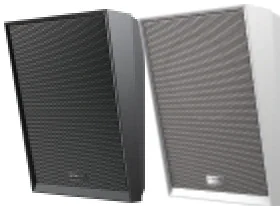
Wall-mounted SIP paging speaker used for zoned announcements over the network

The short answer

Size an IP paging system by zone and by space, then choose the shape. A building with a reception, a canteen, four corridors, a car park and a plant room is 7 zones; the family supports up to 20 multicast zones with prioritisation, so the zoning is a design decision rather than a hardware ceiling. Each zone needs its own speaker run and its own addressing, which is what makes one announcement different from another.

The published power figures are the ones to design to. The A233 horn is rated at 30 W output with IP66 for outdoor and high-noise areas; the FH-S01 ceiling speaker reaches up to 20 W with a built-in class D amplifier on PoE to IEEE 802.3af; the A212 wall speaker is 8 Ω with up to 15 W class D output (PoE 8 W / PoE+ 15 W) and publishes talkback through an omnidirectional microphone; and the A513W video speaker is published at up to 10 W on a DC supply inside an IP66 enclosure with a 4 MP camera.

One figure in the source conflicts with itself, and the honest answer is to say so: the A201 ceiling speaker is printed with both 30 W and 10 W in different places, so its rated output is confirmed on the quotation rather than quoted from a marketing page. Everything else — the PoE classes, the zone count, the offline timed broadcast and the gateway outputs — is as documented. Prices are not published on this site; every system is quoted per zone count and per position.

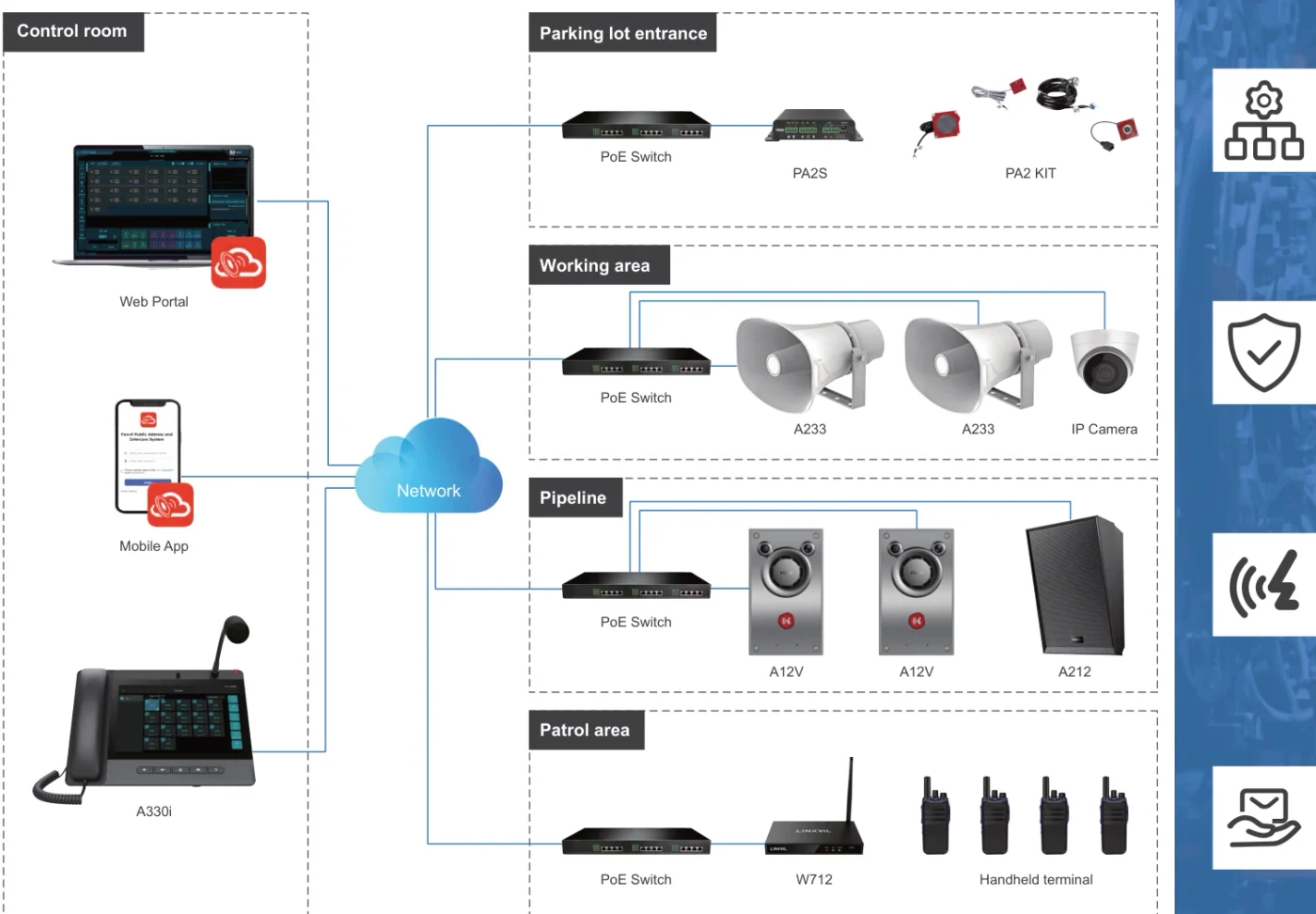
Paging architecture: the deployment tiers, and how zones and endpoints attach to them

What goes wrong on this type of site

The zone plan comes before the speaker schedule

A building with one zone is a building where every announcement interrupts everyone. Zoning is the design work: up to 20 multicast zones with prioritisation, each on its own run, addressed from a console or an IP phone.

Two wattages in one source

The A201 ceiling speaker is printed with both 10 W and 30 W in the source material. The honest handling is to say so and confirm the rated output on the quotation rather than to publish whichever figure reads better.

The old amplifier line still works

Replacing a 100 V line system is expensive and often unnecessary. PA3 and PA2S drive the existing passive speakers with a 10–30 W mono output and a line out, so the changeover happens zone by zone as budget and shutdown windows allow.

Power over the network cable

PoE classes differ across the family, and a hall full of speakers plus a console can exceed a switch before the port count does. Budget the PoE per switch, and keep the DC alternative in mind for the positions that are hardest to feed.

Choosing by size

Size bandSystemDevicesNotes
Single room or small office — 1 to 3 zonesOM20G — 24 SIP trunks; 4 analog ports if a legacy line is kept1–3 speakers (A201 ceiling / A212 wall), 1 desk phone as the paging position, or a console where paging is frequentThe smallest builds often use a desk phone as the announcement position; group broadcasting from a console phone such as the X210i is added when paging becomes a daily task.
Shop, clinic or small school — 3 to 8 zonesOM50G — 62 SIP trunks; up to 12 analog ports across 3 interface cards6–16 speakers across 3–8 zones, 1 console (X210i / A330i), 1 gateway where an old amplifier line is keptThe lite tier is designed for exactly this size: a console phone manages the endpoints, with automatic terminal discovery and provisioning and no dedicated server.
Office building, hotel or hospital wing — 8 to 20 zonesOM200G — 496 SIP trunks; up to 96 analog ports on 24-line interface cardsSpeakers per floor and per area indoors, horns outdoors, consoles per paging position, gateways per legacy block4 hot-swap card slots and gigabit Ethernet as the paging backbone. PoE budgeting per switch is the design decision that matters most at this size.
Campus, plant or district with several buildingsOM1000-UC — 1000 SIP trunks, up to 200 concurrent calls per trunkThe per-building zone counts repeated, a shared dial plan, one management position per site or a central oneThe advanced tier is stated for large-scale deployments with cloud or on-premise B/S architecture for multi-site management, with dynamic zone control, remote volume adjustment and text-to-speech.
Retrofit over an existing analog paging systemOM50G or OM200G — 62 or 496 SIP trunksPA3 or PA2S gateways driving the existing passive speakers, with SIP speakers added zone by zoneThe IP endpoint tier is stated to bridge legacy paging systems into the IP environment. Both gateways publish a 10–30 W mono output that adapts to the input voltage and a line out for an external amplifier.
Outdoor coverage — yard, car park, sports fieldOM200G or OM50G — 496 or 62 SIP trunksHorn speakers (A233, IP66, 30 W rated output) as their own zones, with outdoor call points on the same systemHorns carry environmental noise detection and a built-in microphone for self-test and two-way voice; position counts follow the measured ambient level rather than a rule of thumb.

Numbers behind the design

The speaker family, with published output and power figures
ModelShape and where it goesPublished output and featuresPower and zones
A233Horn: yards, car parks, sports fields, loading areasHorn speaker with 30 W rated output, high sound clarity and wide dynamic range, and a built-in microphone for system self-test, monitoring, environmental noise detection, volume adjustment and two-way voiceIP66; PoE, PoE+ or DC; up to 20 multicast zones
FH-S01Ceiling: rooms and halls where a stronger amplifier is neededUp to 20 W with a built-in class D amplifier, all-in-one codec, amplifier and speaker, talkback through a built-in microphone, a customisable WAV for emergency notification and alarm, and linkage with security alarming devicesPoE to IEEE 802.3af; up to 20 multicast zones with prioritisation; 10/100 Mbps Ethernet
A212Wall: corridors, canteens, halls, production areas2-way coaxial speaker at 8 Ω with up to 15 W class D output, talkback through an omnidirectional microphone, alarm linkage, offline timed broadcast, an external volume knob and the ability to drive an analog passive speaker10/100 Mbps Ethernet with integrated PoE, published as PoE 8 W / PoE+ 15 W (CN deck states IEEE 802.3at); wall mount with an optional angle bracket
A201Ceiling: general indoor coverageCeiling SIP speaker with a built-in microphone, system self-test, monitoring, environmental noise detection, volume adjustment, two-way voice and offline timed broadcastPoE, PoE+ or DC; up to 20 multicast zones; the rated output is printed two ways in the source, so the wattage is confirmed on the quotation
A513WWall or ceiling: unattended areas needing a camera tooAll-in-one SIP speaker with a built-in 4 MP HD camera with IR night vision, built-in microphones, H.264, dual-band 2.4G/5G Wi-Fi and BLE, and relay in and out for a PIR sensor, infrared sensor or strobe lightIP66; PoE or DC; up to 10 W on a DC supply
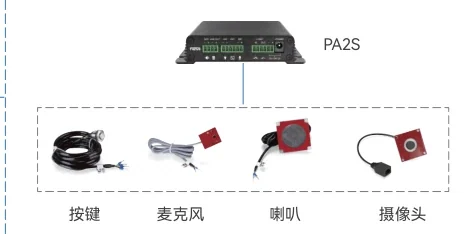
PA2SGateway: bridging an existing speaker lineSIP intercom and paging gateway with a 10–30 W mono output adapting to the input voltage, a line out for an external active speaker, an SOS call key, a recording output, 1 short-circuit in and 1 out with a built-in relayPoE to IEEE 802.3af or 12–24 V 2 A DC; −30 °C to 60 °C
PA3Gateway: larger legacy system with scheduled audioSIP paging gateway with a 10–30 W mono output, a line out, an SOS call key, a 3.5 mm line in, USB 2.0 and TF storage, analog output to passive speakers or amplifiers, and video linkage with an IP cameraPoE / PoE+ (IEEE 802.3at, published as PoE Class 4) or 12–24 V 2 A DC; −20 °C to 50 °C
X210i / A330iThe paging position, not a speakerX210i: 106 DSS keys across three screens with a gooseneck microphone, group broadcasting, 20 SIP lines. A330i: 116 DSS keys, 10.1-inch touchscreen, 92 dB speaker, a built-in broadcast system, 8 short-circuit inputs, 1 output and RS-485Dual Gigabit ports with integrated PoE; terminals used with the consoles are scanned and provisioned automatically
This design against a conventional amplifier and speaker system
RequirementConventional amplifier and 100 V line systemThis IP designWhat changes operationally
Zone selectionRotary switches or relay cards on the amplifier, one circuit per positionUp to 20 multicast zones with prioritisation, addressed from a console or an IP phone, with dynamic zone control and remote volume adjustment in the advanced tierAny combination of areas is addressable from a screen, and levels are trimmed per device
Scheduled messagesA timer unit wired into the amplifier, or a manual clockScheduled broadcasting with custom time templates, plus offline timed broadcast held on the A201 and A212 speakers and real-time text-to-speech in the advanced tierThe timetable is a configuration, and the speakers keep it if the network drops
CablingA 100 V line run through the building, with tap settings at each speakerOne network run per speaker with PoE where published, or a bridged legacy line through a PA2S or PA3 gatewayA new speaker is a network device rather than a tap on a line
TalkbackNot available: the system only broadcastsTalkback is published on the A212 and FH-S01, two-way voice on the A201 and A233, and the console family carries gooseneck microphonesThe models that publish two-way audio are specified for the positions that need it
Emergency and alarm audioA separate alarm interface or a manual switchOne-key alarm activation, alarm light flashing and simultaneous calling to the management unit; short-circuit inputs take alarm buttons and sensors; a customisable WAV on the FH-S01 for emergency notificationThe alarm and the announcement share one system with priority designed in
RecordsNoneAudio archiving of SIP paging, intercom and calls where the paging tier provides it; call detail records to a server on port 1809An announcement can be reviewed afterwards
Fault findingWalk the building with a meterSystem self-test, monitoring and environmental noise detection on the speakers; an interactive digital map in the advanced tier; remote volume adjustment per deviceThe system reports its own state before anyone complains

Deployment by area

AreaDeviceNote
Corridors, canteens and halls — wall coverageA212 wall speaker2-way coaxial speaker at 8 Ω with up to 15 W class D output, talkback through an omnidirectional microphone, alarm linkage and offline timed broadcast; PoE 8 W / PoE+ 15 W, wall mount with optional angle bracket, external volume knob and the ability to drive an analog passive speaker.
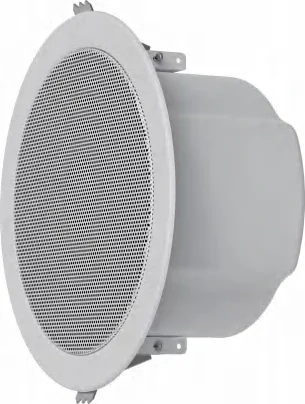
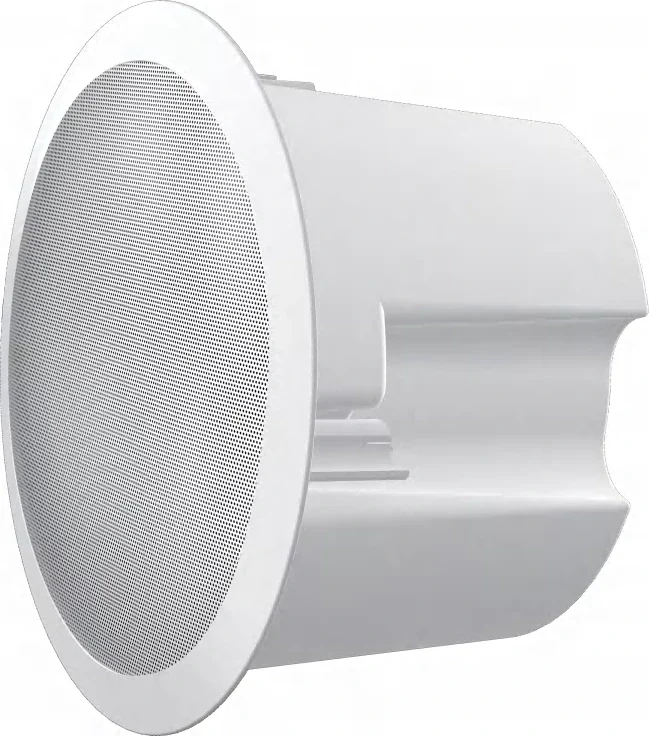
Halls and rooms needing more ceiling outputFH-S01 ceiling speakerUp to 20 W with a built-in class D amplifier, talkback, a customisable WAV for emergency notification and alarm, and linkage with security alarming devices, on PoE to IEEE 802.3af.
General indoor ceiling coverageA201 ceiling speakerBuilt-in microphone, self-test, monitoring, environmental noise detection, two-way voice and offline timed broadcast on PoE, PoE+ or DC; the rated output is printed two ways in the source, so the wattage is confirmed on the quotation.
Yard, car park, loading area and sports fieldA233 horn speakerIP66 horn with 30 W rated output, high sound clarity, a built-in microphone for self-test, monitoring, environmental noise detection, volume adjustment and two-way voice, on PoE, PoE+ or DC.
Unattended area needing audio and video togetherA513W video speakerIP66 all-in-one SIP speaker with a 4 MP HD camera with IR night vision, built-in microphones, H.264, dual-band 2.4G/5G Wi-Fi and BLE, relay in and out for a PIR sensor, infrared sensor or strobe light, and up to 10 W on a DC supply.
Existing analog paging linePA2S or PA3 SIP paging gatewayA 10–30 W mono output that adapts to the input voltage with a line out for an external active speaker or amplifier; PA2S adds a built-in relay with 1 in and 1 out and an SOS call key, PA3 adds line in, USB 2.0, TF storage and IP camera linkage.
Paging positionX210i or A330i console (A320i for the serverless tier)X210i: 106 DSS keys across three screens with a gooseneck microphone and group broadcasting. A330i: 116 DSS keys, 92 dB speaker and a built-in broadcast system with 8 short-circuit inputs, 1 output and RS-485. A320i runs the lite tier without a dedicated server.

Questions buyers ask

How many speakers does a zone need?

A zone is a run, not a count: one corridor, one hall, one canteen or one outdoor area. Within a zone the number of speakers follows the coverage and the ambient noise, and the published figures to design to are 30 W rated output on the A233 horn, up to 20 W on the FH-S01, up to 15 W class D on the A212 and up to 10 W on the A513W.

  • The speaker family supports up to 20 multicast zones with prioritisation, so the design ceiling is usually the zoning plan rather than the equipment.
  • Each zone should be its own run so it can be addressed and volume-adjusted independently, with remote volume adjustment available per device in the advanced tier.
  • The A201 and A212 hold an offline timed broadcast, which is what keeps a scheduled message running if the network or the desk is interrupted.

Which speaker should be used outdoors?

The A233 horn: an IP66 horn speaker with 30 W rated output, a built-in microphone for self-test and monitoring, environmental noise detection and two-way voice. It registers as its own multicast zone and needs no separate weatherproofing.

  • For a position that needs a camera as well, the A513W is IP66 with a 4 MP IR camera, built-in microphones and relay in and out for a PIR sensor, infrared sensor or strobe light.
  • Mounting position, drainage and cable entry are installation matters; confirm them against the rating rather than assuming a canopy is indoors.
  • Where the site already has an outdoor horn line, the PA3 or PA2S gateway can drive those passive speakers instead of replacing them.

Do these speakers need an amplifier?

No. The A212 and FH-S01 have a built-in class D amplifier (up to 15 W and up to 20 W respectively), the A201 is a self-contained ceiling speaker, the A233 is a self-contained horn and the A513W is an all-in-one unit — each takes power over the network or from a DC supply and receives audio over SIP.

  • Where an analog amplifier and passive speakers already exist, the PA2S or PA3 gateway drives them with a 10–30 W mono output and a line out for the amplifier, which is how a hybrid system is built.
  • The A212 can also drive an analog passive speaker, which is useful where one position has an unusual form factor.
  • The paging position itself is a console phone such as the X210i or A330i, not an amplifier at the rack.

Can these speakers do two-way audio?

On the models that publish it. The A212 and FH-S01 publish talkback through a built-in microphone, the A201 and A233 publish two-way voice, and the A513W has built-in microphones. What the whole series does not do is two-way broadcast, which the material states clearly.

  • Design talkback positions by model: a room that needs a conversation takes an A212 or FH-S01 rather than an announcement-only unit.
  • The console end of a talkback call is a gooseneck-microphone console (X210i) or a hands-free position such as the A330i with a 92 dB speaker.
  • Speech codecs are G.722 and Opus across the family, with the A212 published at a sampling rate up to 44.1 kHz and MP3 broadcast support.

How are announcements scheduled?

By schedule. Scheduled broadcasting uses custom time templates, real-time text-to-speech covers typed messages in the advanced tier, and the A201 and A212 speakers keep an offline timed broadcast running on their own so a routine message does not depend on a live operator.

  • Live announcements can be made to individuals or groups from a console, or from a mobile app with alerts on the advanced tier.
  • The interactive digital map shows device state on building plans, which is how a large site keeps track of what is playing where.
  • A bell, a period-end tone and a spoken announcement are all just audio files on a SIP speaker; the schedule decides which file plays.

Do we need a server for IP paging?

Not necessarily. The lite tier is built around a console phone such as the A320i, eliminating the traditional need for a dedicated server, with automatic discovery and provisioning of terminals and zone management from a 10.1-inch screen. The advanced tier uses cloud or on-premise B/S architecture where multi-site management, text-to-speech or digital maps are required.

  • Devices across the tiers can be scanned and provisioned automatically by the A330i, A320i and A308i consoles, which shortens commissioning on a large site.
  • The IP endpoint tier stands alone with SIP compatibility, PoE and short-circuit inputs, for sites that keep their existing platform.
  • Whatever the tier, the PBX supplies the extensions and the dial plan behind it.

Which power figures should be budgeted?

The published ones: FH-S01 on PoE to IEEE 802.3af, A212 as PoE 8 W / PoE+ 15 W, A201 on PoE, PoE+ or DC, A233 on PoE, PoE+ or DC, A513W on PoE or DC, PA2S to IEEE 802.3af and PA3 to PoE/PoE+ (IEEE 802.3at, published as PoE Class 4) with 12–24 V 2 A DC as the alternative.

  • Budget PoE per switch rather than per building: a hall with a console, an A233 and several ceiling speakers can draw more than a whole floor of desk phones.
  • Where a gateway drives an analog amplifier, allow the DC alternative as the fallback if the PoE budget is tight.
  • Confirm the final speaker list, and the A201 rated output, on the quotation.

Cabling, power and network notes

  • One network run per speaker, with PoE where published: FH-S01 to IEEE 802.3af, A212 as PoE 8 W / PoE+ 15 W, A201 on PoE, PoE+ or DC, A233 on PoE, PoE+ or DC, A513W on PoE or DC.
  • Zones are wired as separate runs so each can be addressed and volume-adjusted independently; up to 20 multicast zones with prioritisation is the family ceiling.
  • For an existing analog line, the PA3 or PA2S output feeds the passive speakers through the old cabling; both publish a line out for an external active speaker and can drive passive speakers directly.
  • Outdoor runs must match the rating of the device on the end: IP66 on the A233 and the A513W, and the gateway temperature ranges of −30 °C to 60 °C (PA2S) and −20 °C to 50 °C (PA3).
  • Where a legacy building has no data cabling, the PN1 converter carries network and power over an existing two-core pair, up to 1600 m for the network function without power.
  • Keep the PoE budget per switch with the zone schedule: a console, a horn and several ceiling speakers on one switch can exceed its budget before its port count runs out.
  • Record the zone schedule with the as-built drawings — which speaker belongs to which zone and which console owns it — because the next change to the building will start from that list.

Choosing the speaker for the space

Shape, output and power, as published

SpaceModelPublished outputPower and checking
Outdoor yard, car park, sports fieldA233 horn30 W rated output, IP66, environmental noise detectionPoE, PoE+ or DC
Hall or room needing stronger ceiling audioFH-S01 ceilingUp to 20 W with a built-in class D amplifier, talkback and a customisable emergency WAVPoE to IEEE 802.3af
Corridor, canteen, production areaA212 wall8 Ω, up to 15 W class D, talkback, alarm linkage, offline timed broadcastPoE 8 W / PoE+ 15 W; optional angle bracket
General indoor ceiling coverageA201 ceilingBuilt-in microphone, two-way voice, self-test, monitoring, offline timed broadcastPoE, PoE+ or DC; rated output confirmed on the quotation
Unattended position with a camera requirementA513WUp to 10 W (DC), 4 MP IR camera, built-in microphones, relay in and outIP66; PoE or DC
Existing analog speaker linePA2S or PA3 gateway10–30 W mono output, line out for an external amplifier, SOS call keyPA2S IEEE 802.3af; PA3 PoE/PoE+ or 12–24 V 2 A DC

Decide the shape first (ceiling, wall, horn or video), then the output, then the power method. Zone design follows the building, not the model list.

Control: consoles, schedules and zones

  • The paging position is a console phone: the X210i with 106 DSS keys and a gooseneck microphone, the A330i with 116 DSS keys and a built-in broadcast system, or the A320i where the lite tier runs without a dedicated server.
  • Live announcements go to individuals or groups from the console, or from a mobile app with alerts on the advanced tier.
  • Scheduled broadcasting uses custom time templates, and the A201 and A212 hold an offline timed broadcast so a routine message plays even if the network or the desk is unavailable.
  • Real-time text-to-speech covers announcements that are typed rather than recorded.
  • Up to 20 multicast zones with prioritisation, with dynamic zone control and remote volume adjustment in the advanced tier, and an interactive digital map for monitoring devices on building plans.

Three deployment tiers for paging

  • Advanced: cloud or on-premise B/S architecture for multi-site management, with high loading capacity, dynamic zone control, remote volume adjustment, real-time text-to-speech and audio archiving.
  • Lite: built around a console IP phone, eliminating the traditional need for a dedicated server, with SIP hotspot, third-party IPBX compatibility, auto terminal provisioning and zone management from the screen.
  • IP endpoint: fully compatible with SIP, bridging legacy paging into the IP environment, with PoE supply, short-circuit inputs for alarms and ONVIF for camera linkage.
  • The IP endpoint tier is also the hybrid route: it is stated to make a full-IP or hybrid solution possible, which is how a building keeps its old speaker line while adding SIP speakers zone by zone.

Tier names and capabilities are as printed in the solution material; endpoint counts and the final speaker schedule are confirmed on the quotation.

Compliance, standards and local requirements

Emergency announcements and the fire interface

Where the paging system is also used for emergency announcements, the interface to the fire detection system and the priority of an alarm announcement over a routine one are regulated locally. The published capabilities that matter are up to 20 multicast zones with prioritisation, one-key alarm activation, alarm light flashing, simultaneous calling to the management unit and a customisable WAV for emergency notification on the FH-S01. Have the fire interface designed and signed off by the site own fire contractor, and keep the announcement path testable through the self-test and monitoring features on the speaker range. Nothing on this page is a certification claim.

Intelligibility, noise and hearing protection

A speaker that cannot be understood is not doing its job, and the places where paging matters most are the noisy ones. The published tools are rated output figures (30 W on the A233, up to 20 W on the FH-S01, up to 15 W class D on the A212, up to 10 W on the A513W), environmental noise detection, volume adjustment, self-test and monitoring. Mounting heights, the coverage of a large open space and the interaction with hearing protection are site matters to be agreed with the safety officer, and the A201 rated output is confirmed on the quotation because the source prints it two ways.

PoE, cable classes and outdoor mounting

PoE is not uniform across the range, so the switch budget and the cable schedule have to follow the actual model list: FH-S01 to IEEE 802.3af, A212 published as PoE 8 W / PoE+ 15 W, A201 on PoE, PoE+ or DC, PA2S to IEEE 802.3af, PA3 to PoE/PoE+ with 12–24 V 2 A DC as an alternative. Outdoor positions must match their rating — IP66 on the A233 and the A513W, and the temperature ranges published for the gateways — and cable classes, containment, separation from power and earthing are local installation rules. Confirm them with the site own contractor before first fix.

Recording, privacy and building rules

Audio archiving of SIP paging, intercom and calls is a published capability of the paging tier, and zones can be monitored and level-adjusted remotely. Where announcements are recorded, where a talkback position can be listened to, and how long audio is retained are policy questions governed by local law and by the building own rules — not properties of the speaker. Decide what is archived, who may retrieve it and what staff and visitors are told, and write it into the operating procedure before the system is commissioned.

Standards referenced

Frequently asked questions

Do IP paging speakers need an amplifier?

No. The A212 and FH-S01 have built-in class D amplifiers (up to 15 W and up to 20 W), the A201, A233 and A513W are self-contained units, and each receives audio over SIP and takes power from the network or a DC supply.

How many zones can one system address?

Up to 20 multicast zones with prioritisation, addressed from a console or an IP phone, with dynamic zone control and remote volume adjustment in the advanced tier. A site with more areas groups them rather than adding systems.

Which speaker goes outdoors?

The A233 horn: IP66 with 30 W rated output, environmental noise detection and a built-in microphone for self-test and two-way voice. The A513W is the IP66 option where a 4 MP IR camera and speaker must share one enclosure.

Can we keep the existing 100 V line speakers?

Yes. The PA3 and PA2S gateways publish a 10–30 W mono output that adapts to the input voltage and a line out for an external amplifier, driving passive speakers and legacy analog horn speakers while SIP speakers are added zone by zone.

Is there a wattage conflict in the published figures?

Yes, for one model. The A201 ceiling speaker is printed with both 30 W and 10 W in the source material, so its rated output is confirmed on the quotation. The other published figures — A233 30 W, FH-S01 up to 20 W, A212 up to 15 W class D, A513W up to 10 W — are used as printed.

Can a speaker do two-way conversation?

On the models that publish it: talkback on the A212 and FH-S01, and two-way voice on the A201 and A233. Two-way broadcast is not supported across the series, so a talkback position must be specified as a model that publishes it.

How is the system powered?

Over the network cable where PoE is published — FH-S01 to IEEE 802.3af, A212 as PoE 8 W / PoE+ 15 W, PA2S to IEEE 802.3af, PA3 to PoE/PoE+ (IEEE 802.3at, PoE Class 4) — with PoE, PoE+ or DC on the A201 and A233 and 12–24 V 2 A DC as the alternative on the gateways.

Project evidence

We have not published a named reference project on this page. The site does not carry customer names or installation records until the client confirms in writing which projects may be made public.

Page author: NEXVIA EngineeringPublished:Last updated:

Covers: ip paging speaker · sip paging horn · voip paging speaker · ip paging system · overhead paging voip

All IP telephony, intercom and paging equipment in this design is supplied and integrated by NEXVIA.

Already decided on a platform, or replacing a system?

Explore Products

Related products

Planning an IP telephony project?

Send us the site type, the number of extensions or rooms and the areas to cover — we will come back with a configuration and quotation.

Send the site details

Six facts build a configuration: site type, extensions or rooms, simultaneous calls, areas to cover, existing lines and the documents you already hold. Send as many as you know — nothing has to be final before the first reply.

  • Reply within one working day
  • Configuration + quotation for your site
  • Your details are used only to answer this inquiry

* required