Deployment
Migrating from an older PBX to IP: a phased cutover
On this page
- Migrations fail on the inventory, not on the equipment — what should you know?
- The inventory — what should you know?
- The numbering decision — what should you know?
- The line strategy: run both, then take the copper out later — what should you know?
- Five phases, each with a rollback — what should you know?
- The test list that makes a cutover boring
- What to hand over
Migrations fail on the inventory, not on the equipment — what should you know?
Replacing an older exchange is mostly a bookkeeping exercise that has to be finished before anything is ordered. The equipment is the easy part: this platform publishes what it can carry. What sinks projects is discovering on cutover night that a fire panel dials out on a line nobody counted, or that the lift's emergency phone is wired to an extension that has been in service since 1998.
So the first deliverable is a spreadsheet with five tabs, one per row of the table below. Fill it in before the first quotation, because it decides the model, the card mix and the cable work at the same time.
The inventory — what should you know?
| What to list | Why it decides something |
|---|---|
| Every extension number and where it is | Decides the numbering scheme and whether positions can be renumbered in batches; the new system numbers extensions from 200 upwards |
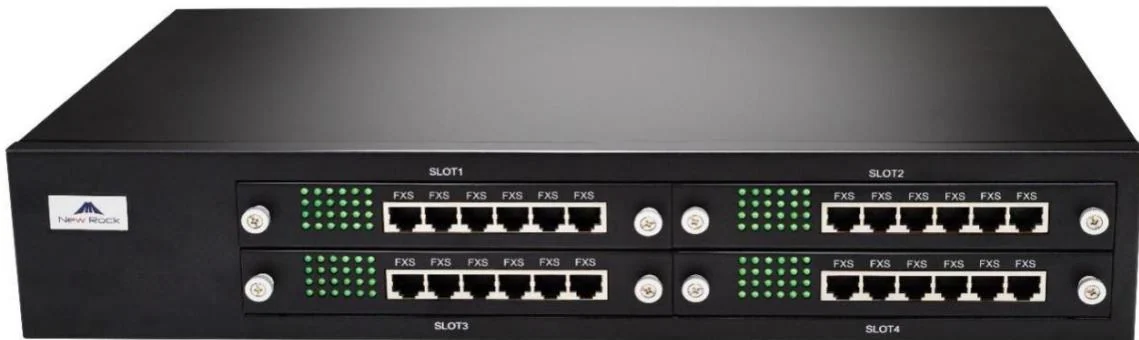
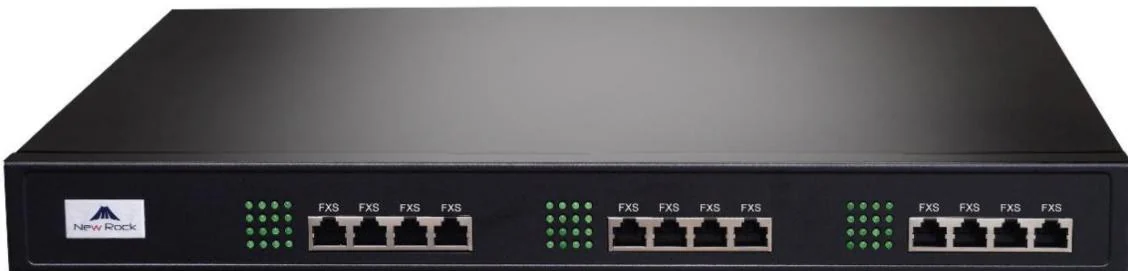
| Every analog device: fax, lift, alarm dialler, legacy door handset, plant-room phone | Decides the analog port count, which climbs from 4 on the OM20G to 96 on the OM200G, and is zero on the OM1000-UC |
| Every outside line, its operator and whether it is in contract | Lines that stay become FXO ports; lines that convert become SIP trunks; a mix allows the analog escape route |
| Every cable pair at every position, and its condition | Decides between re-cabling, a 2-wire retrofit, and keeping the position analog on an FXS port |
| Cable runs longer than the site expects | A 2-wire converter reaches 1600 m for the network function without power, but only 300 m for network plus power - distance rules out options quietly |
Two more rows belong on the same sheet even though they are not telephony: the paging speakers and their amplifier, which a paging gateway can bridge into the IP system, and the door intercom positions, which are SIP terminals like any other.
The numbering decision — what should you know?
There are only two sane options and they should be taken deliberately rather than inherited.
- Keep the existing numbers where staff and guests have memorised them - a hotel's room numbers, a hospital ward's extension block. The new system can reproduce any plan; the work is the extension list, not the hardware.
- Renumber in blocks where the old plan has grown by accretion: extensions in a defined range per department, service extensions in their own block, and care or guest extensions separate from the office. Extensions are numbered from 200 upwards on this platform, and batches are created in one operation, so a clean plan costs an afternoon rather than a fortnight.
Whichever is chosen, keep the ward or room block contiguous. It is what makes a ring group, a pickup group and a console display readable later - and group pickup reaches up to 32 departments, which only helps if the numbering reflects the structure.
The line strategy: run both, then take the copper out later — what should you know?
A cutover is much less frightening when the old exchange is not switched off on day one. This platform is comfortable running both kinds of line at once, and it publishes six ways to choose an outbound line: analog sequential, analog rotating, SIP sequential, SIP rotating, a smart mode that puts local calls on the analog lines and long distance on SIP, and a routing table with 500 entries.
- Leave the existing operator lines wired to FXO ports on the new PBX during the transition, and switch them off pair by pair as the SIP trunk proves itself.
- Switch on the analog escape route: an outbound SIP call can fall back to an analog line on timeout or on a 4xx, 5xx or 6xx response, with 401, 404 and 422 excluded so numbering errors do not reroute to a paid line.
- Where the site keeps a fax, give it an FXS port and its own DID rather than routing it through the auto attendant. Over an analog line, fax must run as G.711 pass-through.
Five phases, each with a rollback — what should you know?
- Phase 1 - parallel build. Install the new PBX beside the old one, on its own address, with the lines still on the old system and two or three test extensions. Nothing in the building changes.
- Phase 2 - the back office and reception. Move the positions that can tolerate a short outage and whose users will report faults clearly. Rollback is re-plugging two handsets.
- Phase 3 - the first floor or the first department. Move a block of extensions that share a number range, then test internal calls, transfer, pickup and the ring group before the next block. Rollback is moving the block's numbers back.
- Phase 4 - the service and guest positions. Rooms, wards, kitchens, workshops. These are moved in batches, and the analog devices with them. Rollback means leaving the old system handling that block for another week - which is exactly why the old system is still powered.
- Phase 5 - decommission. Only when every outside line has been moved, every alarm and lift tested, and the configuration has been exported and stored.
The test list that makes a cutover boring
- Outbound and inbound calls on every line, including the ones being retired, until the day they are disconnected.
- The escape route, tested on purpose: pull the SIP trunk and confirm an outbound call leaves on copper.
- Network redundancy if it is in the design: the second Ethernet port can be set as a redundant link that takes over in about 1.75 seconds.
- Every analog device, from the caller's side: fax both directions at the machine's normal speed, the lift, the fire panel's dialler, the alarm.
- Voicemail retrieval by dialling *98, and the operator position answering on extension 200 with its five numbers.
- Recording, if the site records: G.711 and G.729 only, and on the larger models to a recorder on port 1311 by default.
- Call detail records to the external server on port 1809 if the site bills calls.
- Debugging tools during the cutover window: port signalling capture for up to 200 seconds and a packet dump of up to 2 MB that opens in Wireshark - neither available on the OM1000-UC, which matters when the fault appears at 02:00.
What to hand over
An extension list that matches the wall labels, the dial plan, the routing table, the analog port allocation, the configuration export and the location of the administrative credentials. A migration is finished when a new administrator can answer a call-routing question from paper alone - not when the last handset works.