
Product range
Wireless Phones and DECT Systems
DECT and Wi-Fi handsets, a multi-cell DECT base and a radio-over-IP gateway in one range. The table shows how the five differ on radio, capacity and battery.
- DECT handsets and Wi-Fi handsets in one range
- Multi-region DECT band support on the W610D
- IP67 protection on the W611W
- Wi-Fi 6 dual-band radios on the W611W and W620W, with 802.11k/v/r roaming on the W611W
- A multi-cell DECT base for up to 300 handsets and 200 simultaneous calls per system
- A RoIP gateway that bridges UHF 400–470 MHz radios to SIP calls
- PoE on the DECT base and the RoIP gateway
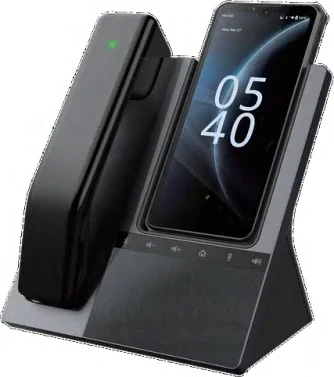
DECT or Wi-Fi — the first decision
Both routes end as SIP extensions on the same PBX. The question is what carries the last few metres: a dedicated DECT radio with its own base stations, or the wireless network that is already installed.
- DECT: W610D handset on a DECT base, with bands supported for America, Europe, Japan, Taiwan and Brazil
- Wi-Fi: the W611W and W620W register over the LAN, so coverage follows the wireless design
- W611W carries IP67 protection and 802.11k/v/r roaming; W620W carries the larger battery and video preview
How the numbers scale
Handset counts are quoted per base and per system, which is what decides the number of bases on a site.
- W710H: up to 30 handsets and 16 simultaneous calls per base
- W710H system: up to 300 handsets and 200 simultaneous calls
- Coverage per W710H base: up to 100 m indoors and 700 m outdoors (US figures; EU 60 m and 350 m)
- One base in the same range is documented for up to 10 W610D handsets and 10 simultaneous calls
Battery figures are lab data
Talk and standby times in this range are quoted as internal lab test data, and they differ between models because the batteries differ.
- W610D: up to 8 h talk / 160 h standby
- W611W: 1900 mAh, up to 9 h talk / 200 h standby
- W620W: 3000 mAh, up to 13 h talk / 240 h standby
- Real-world time depends on use; each model page lists its own documented figures
Wireless Phones and DECT Systems in this range
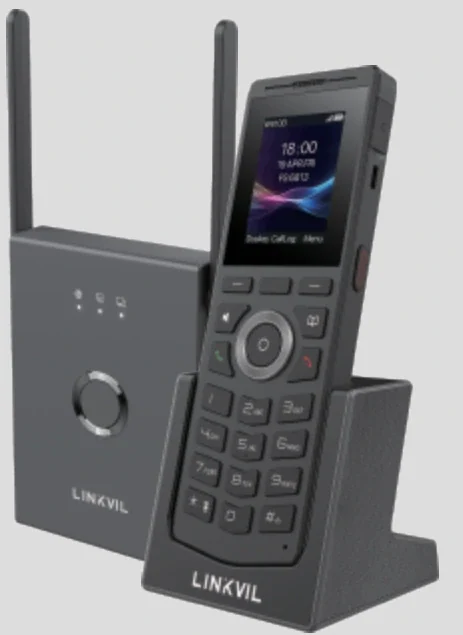
W610D
A DECT handset for sites that want their own radio coverage.
- 2-inch 240×320 screen
- 16 DSS keys + side key
- 8 h talk / 160 h standby
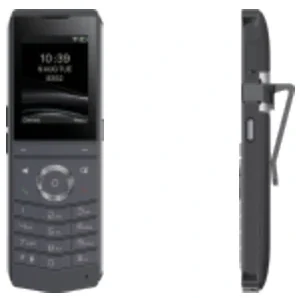
W611W
An IP67 Wi-Fi 6 handset for staff who carry a phone all shift.
- IP67 rated
- Wi-Fi 6 dual band
- 9 h talk / 200 h standby
W620W
A larger battery, dual microphones and video preview in a Wi-Fi handset.
- 3000 mAh battery
- Wi-Fi 6 dual band
- H.264 VGA video
W710H
A multi-cell DECT base for whole-site coverage with seamless roaming.
- 30 handsets per base
- 16 calls per base
- 300 handsets per system
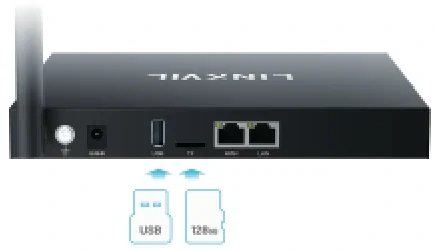
W712
Bridges a UHF radio fleet to SIP calls, with recording and web management.
- UHF 400–470 MHz
- SIP standard protocol
- 1 radio + 1 SIP call
Choosing between options
Wireless range comparison
| Model | Type | Battery / power | Radio | Keys | Notes |
|---|---|---|---|---|---|
| W610D | IP DECT handset | Up to 8 h talk / 160 h standby (lab data) | DECT, multi-region bands | 16 DSS + 1 side key | Bluetooth 5.0, drop-safe 1.8 m |
| W611W | Portable Wi-Fi handset | 1900 mAh; up to 9 h / 200 h | Wi-Fi 6 dual band, 802.11k/v/r | 16 DSS + 1 PTT | IP67, Bluetooth 5.0 |
| W620W | Portable Wi-Fi handset | 3000 mAh; up to 13 h / 240 h (lab data) | Wi-Fi 6 dual band, roaming | 16 DSS + 1 programmable + 1 PTT | H.264 VGA video preview |
| W710H | DECT multi-cell base | PoE | DECT; 30 handsets per base | Not applicable | 16 calls per base, 200 per system |
| W712 | RoIP gateway | PoE (at) / DC 12 V | UHF 400–470 MHz + SIP | Not applicable | 1 analog/DMR II radio + 1 SIP call |
Frequently asked questions
DECT or Wi-Fi — which should we specify?
Why do the battery figures differ between models?
How many bases will our building need?
Can we bridge an existing radio fleet to the phone system?
Planning an IP telephony project?
Send us the site type, the number of extensions or rooms and the areas to cover — we will come back with a configuration and quotation.
Send the site details
Six facts build a configuration: site type, extensions or rooms, simultaneous calls, areas to cover, existing lines and the documents you already hold. Send as many as you know — nothing has to be final before the first reply.
- Reply within one working day
- Configuration + quotation for your site
- Your details are used only to answer this inquiry
Page author: NEXVIA EngineeringPublished: Last updated: