Skip to content

Scenarios · healthcare

Hospital Phone Systems — ward calls, nurse call and site telephony on one IP network

A hospital phone system has to carry two kinds of traffic at once: the administrative telephony of a working institution, and the ward call chain that decides how fast a patient is reached. In the design documented here both sit on one IP network — bed-side and door-side stations, bathroom pull cords, the nurse console and corridor indication register as SIP terminals on the same PBX as the ward, office and plant-room phones. The two sized plans below are the reference deployments printed in the care material and are used as counting templates, not customer projects. NEXVIA designs, manufactures, supplies and commissions the system; the care terminals and phones are manufactured by NEXVIA.

  • One network for both jobs: ward call points and the site telephony register as SIP terminals on the same PBX
  • A 50-bed clinic plan counted device by device: 50 bed-side stations, 15 door-side stations, 15 bathroom pull cords, 1 console, 15–20 portable handsets
  • A 70-bed nursing-home plan: 70 bed-side stations, 70 bathroom call points, 40 corridor lights as an option
  • Emergency calls require a password before the connection is made, so a real person answers rather than a device
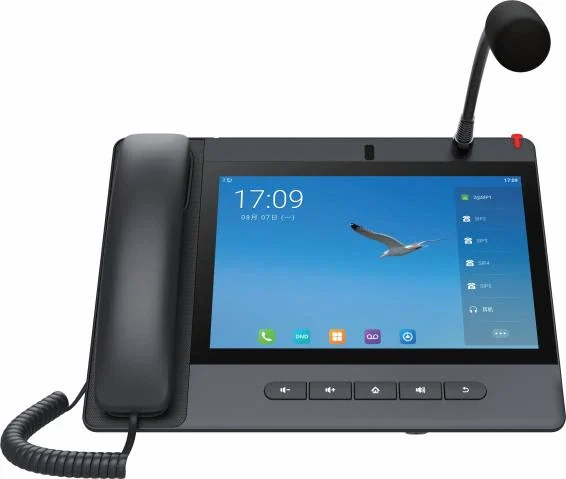
  • A320i nurse console: 10.1-inch 1280×800 touchscreen, 20 SIP lines, up to 116 DSS keys and up to 100 connected devices
  • Calls transfer automatically to a portable handset when the nurse station is unattended, and ward speakers amplify the call
Carer at a bed-side call station in a hospital room

The short answer

A 50-bed clinic is a 50-call-point system: the reference plan printed in the care material counts 50 bed-side stations, 15 door-side stations, 15 bathroom pull cords, 15 corridor lights, 1 nurse console and 15–20 portable handsets, with 2 corridor displays per floor as an option. A 70-bed nursing home is counted the same way: 70 bed-side stations, 70 bathroom call points, 1 console, 40 corridor lights optional and 4 displays per floor optional.

Everything in that chain is IP and SIP rather than a proprietary bus, so the ward traffic and the hospital telephony share one network: the PBX publishes 24 to 1000 SIP trunks across five models, each trunk carrying up to 120 concurrent calls (200 on the OM1000-UC). The nurse console alone supports 20 SIP lines, up to 116 DSS keys and up to 100 connected devices.

The design rules that make it work are physical, not digital: bathroom pull cords reach the floor with a 2 m cord, the wireless option links over 433 MHz across 6–25 m indoors and the station hosts up to 10 wireless buttons. Prices are not published — NEXVIA quotes each project on the ward count, the room mix and the cable already in the building.

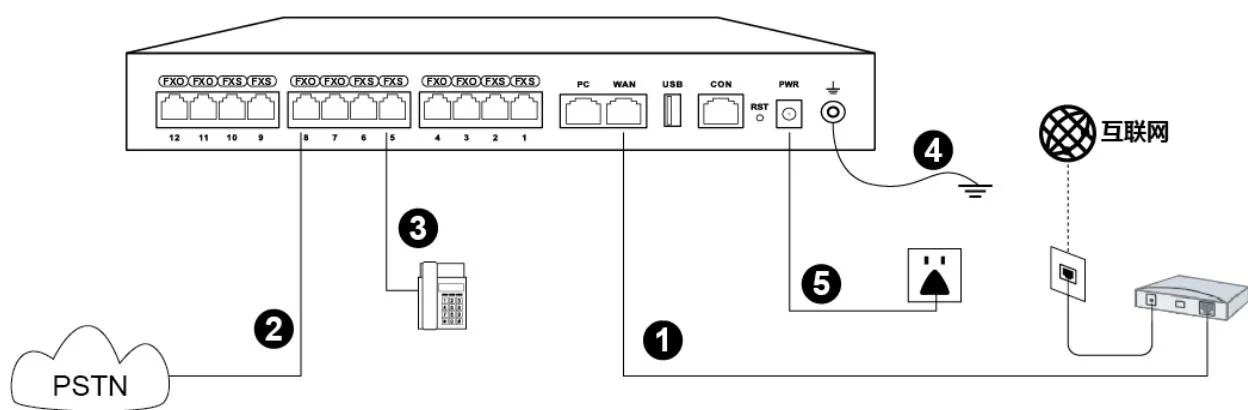
System wiring: internet uplink, PSTN lines, analog phones and grounding all land on one chassis

What goes wrong on this type of site

A call that rings where nobody is standing

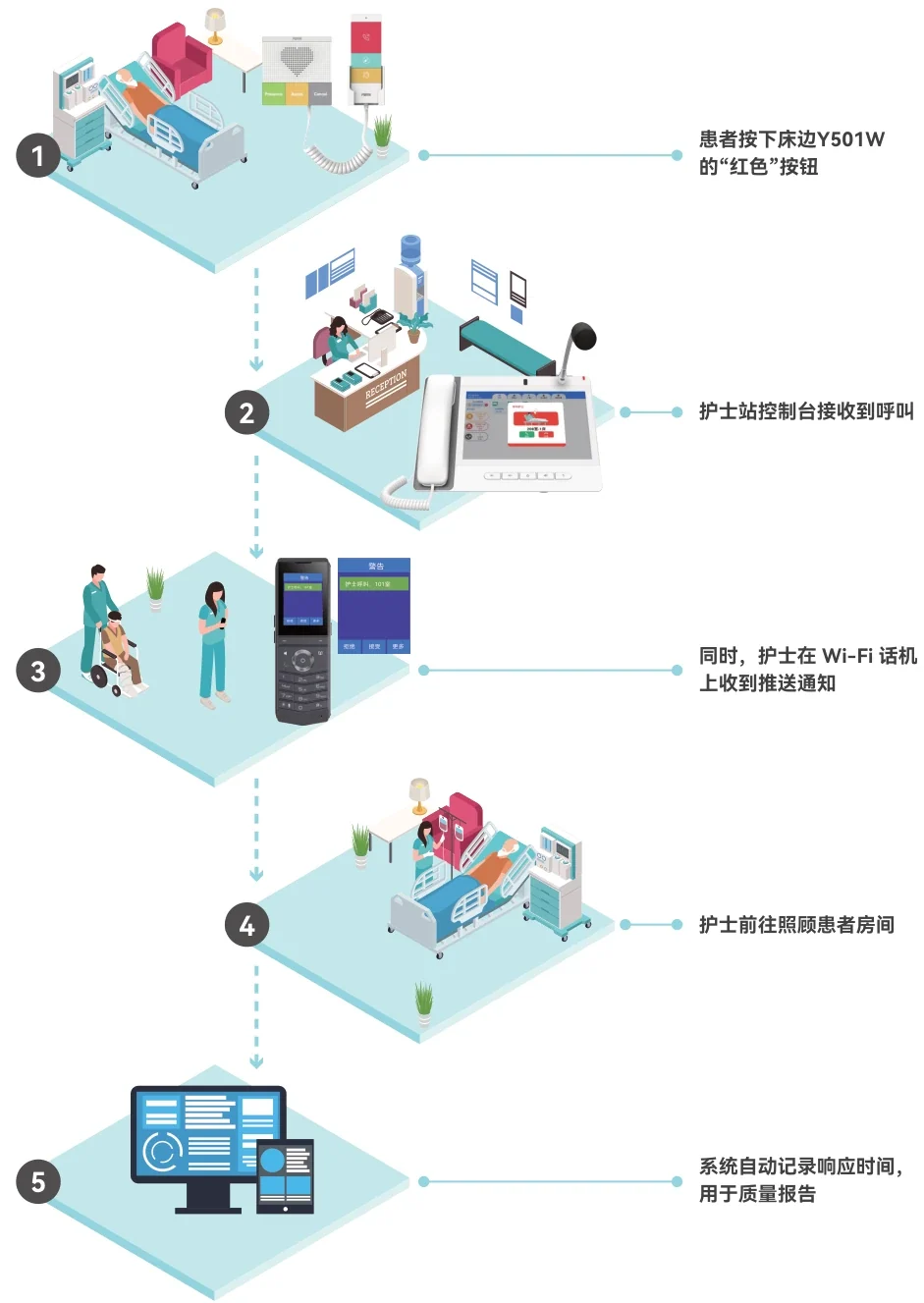
Ward staff are between rooms, not at a desk. The chain is built to widen: the call forwards to a portable handset when the station is unattended, speakers can amplify the incoming call, and the corridor display plus the light over the door identify the room to whoever is passing.

Several call points in every room

The bed-side station carries nurse call and staff assist, the bathroom needs a pull cord at floor level, and the door-side station carries code blue. Counting all three against every room before the cabling is fixed is what keeps the plan honest — the clinic plan counts 50 bed-side, 15 door-side and 15 bathroom points in the same 15 rooms.

Night shift, one console

At night a smaller team covers more rooms. Prioritised calls with colour coding, call and attendance logs, and zoned paging let the console act as the single point of responsibility without losing the room number.

Upgrading from an analog or bus system

The care material documents the IP and SIP approach as easy to wire and reconfigure, able to reuse the IT network, and able to integrate with access control and PA systems — and positions it for nursing homes and small to mid-sized hospitals that are upgrading. The same material records that advanced feature sets such as HIS/EHR/RTLS integration and multi-nurse-station interlink are outside what this system documents, so a tender that requires them needs a different conversation.

Choosing by size

Size bandSystemDevicesNotes
Small clinic or care home — up to about 40 roomsOM50G — 62 SIP trunksOne bed-side station per bed, one bathroom pull cord per bed or bathroom, 1 × A320i console, 15–20 portable handsetsScale the ratios in the 70-bed plan down to the room count. Ring groups hold up to 40 extensions on this model, and capacity is published in SIP trunks because a maximum extension count is not stated.
50-bed clinic — 10 four-bed and 5 two-bed rooms, 3 shiftsOM1000-UC — 1000 SIP trunks, up to 200 concurrent calls per trunk50 × Y501W-Y bed side, 15 × Y501W door side, 15 × KT30/KT31 bathroom buttons, 15 × CL-01, 1 × A320i console, 15–20 portable handsets, 2 × CMD-01 per floor as an optionCounts are the clinic plan printed in the care material; the corridor displays and lights are marked optional there, and the plan does not name a PBX model — the model here is a reference choice sized on SIP trunks.
70-bed nursing home — 10 single and 30 double rooms, 15 carers plus RN and cleanersOM200G — 496 SIP trunks; up to 96 analog ports if a legacy line is kept70 × Y501W / Y501W-Y bed side, 70 × KT30/KT31 bathroom buttons, 1 × A320i console, 15–20 portable handsets, 40 × CL-01 as an option, 4 × CMD-01 per floor as an optionThe plan counts one bed-side station per bed and one bathroom call point per bed; the corridor items are printed as optional. Confirm the final ward and bed count on the quotation.
Hospital block — several wards, floors or buildingsOM1000-UC — 1000 SIP trunksThe per-ward counts repeated floor by floor, one A320i per nurse station, 2–4 × CMD-01 per floorSIP only, with dual hot standby (3 fixed IP addresses) and multi-site networking for a campus of more than one building. The care material does not state a maximum number of stations per system.
Ward extension or refurbished wingOM200G — 496 SIP trunksNew stations on the IP network, existing analog call wiring bridged or terminated where pairs still reach the frameUp to 96 analog ports on 24-line interface cards, with PT2400 or PT4800 patch panels, is how a wing that cannot be re-cabled is brought onto the same system.

Numbers behind the design

Care terminals and telephony terminals, as published
ModelRole in the hospitalPublished specificationConnection
Y501 / Y501W / Y501-Y / Y501W-YBed-side station: nurse call, staff assist call, staff presenceAntibacterial detachable buttons; hosts up to 10 KT10/KT20/KT30 wireless buttons; powers and controls the CL-01 lightSIP over the network; PoE support per the product guide; handset on the -Y variants
Y501W door-side stationDoor position: staff emergency call and code blueSame Y501 platform, placed at the door per the layout guidance; the 50-bed plan uses 15SIP over the network; PoE support per the product guide
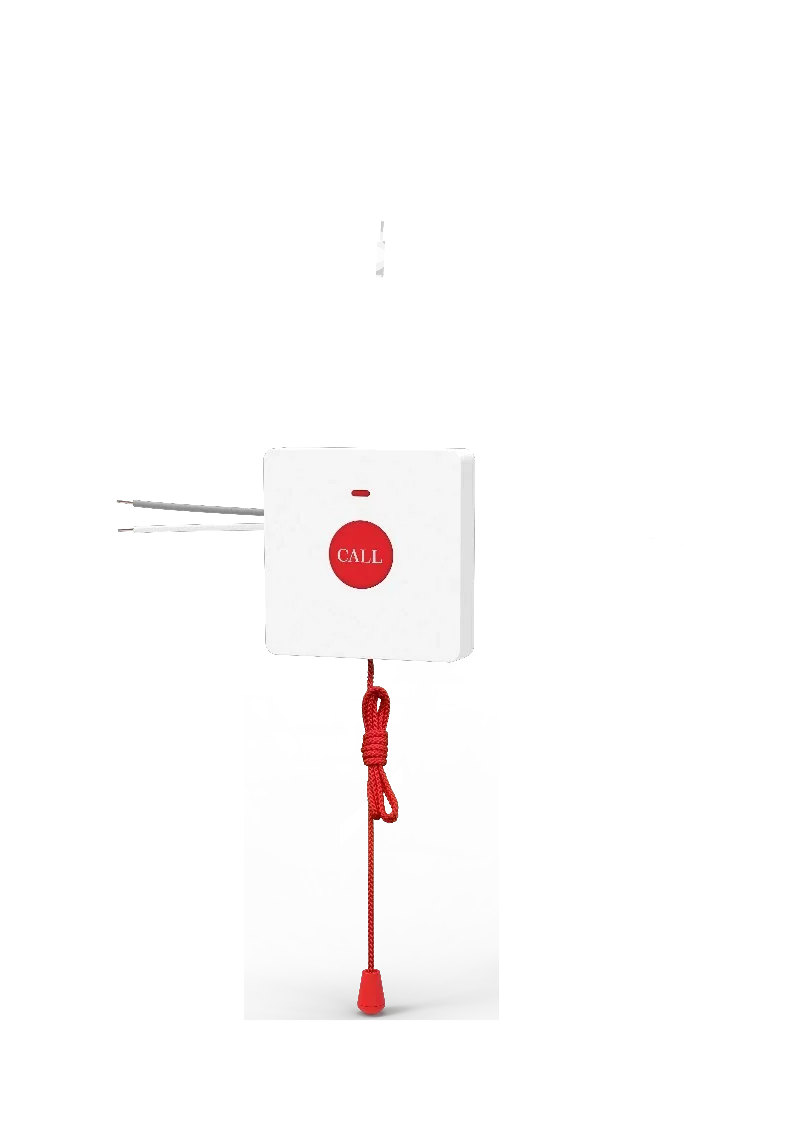
KT30Bathroom pull cord, wirelessIP65, battery inside, 2 m cord, 433 MHz link over 6–25 mNo data cable: radio link to the station in the room
KT31Bathroom pull cord, wiredIP44, no power needed, 2 m cord, wired to the Y501 series stationWired back to the bed-side station
CL-01Corridor light over the room doorRed, green, blue and yellow states; 86 box or wall mountingPowered and controlled by the Y501 series station (a supplementary guide also allows a 12 V DC adapter)
CMD-01Corridor display of room and call statusUp to 30 prioritised messages, double-sided LED display, 128×32 dots, multilingualWorks with the nurse console phone
A320iNurse console: priority calls, logs, broadcasting, access control10.1-inch 1280×800 touchscreen, 20 SIP lines, up to 116 DSS keys, up to 100 devices, 92 dB speaker, 8 MP camera, Android 9.0SIP; dual Gigabit ports with integrated PoE; emergency calls require a password before connecting
A308iSmaller console position or secondary station7-inch 1024×600 touchscreen, 20 SIP lines, up to 116 DSS keys, 90 dB speaker, 5 MP cameraSIP; dual Gigabit ports, integrated PoE
W611W / W620WCarer on the move; receives forwarded callsW611W IP67, 1900 mAh, up to 9 h talk / 200 h standby. W620W 3000 mAh, up to 13 h / 240 h, H.264 video previewWi-Fi 6 dual-band 2.4G and 5G
FH-S01 / A212Ward speaker that amplifies an incoming callFH-S01 PoE to IEEE 802.3af, up to 20 W with class D amplifier. A212 8 Ω, up to 15 W class D, PoE 8 W / PoE+ 15 WSIP, PoE; up to 20 multicast zones with prioritisation
This design against a conventional analog or bus nurse call system
RequirementConventional analog or bus systemThis IP designWhat changes operationally
CablingDedicated bus or multi-pair cabling per call pointSIP terminals on the site network; the bed-side station carries PoE and drives the corridor lightThe ward shares the building network instead of a separate cable system
Change of room useRewire the bus and re-address the pointRe-address the station and update the console; terminals used with the console are scanned and provisioned automaticallyA ward reconfiguration is a configuration task
Call typesOne call for all events, or a fixed priority schemeNurse call, toilet emergency, staff assist and code blue are separated at the call point, with slow or quick flash patterns and colour coding on the consoleThe response differs by event, and staff can see which is which
Reaching staff away from the stationAdd a pager system or corridor lamp fieldCalls transfer automatically to the W611W portable handset; ward speakers amplify the call; the corridor display shows room and call statusThe chain widens without a second system
Record keepingPaper log at the stationCall and attendance logs can be viewed and exported from the console; PBX call recording in G.711 and G.729 where a recording server is usedA record exists for review after an incident
IntegrationClosed protocol, vendor-specific integrationThe system is IP and SIP based and integrates with access control and PA systems, per the care materialThe ward system joins the building systems rather than standing apart
Site telephonyA second, separate telephone systemThe same PBX carries ward, office, plant-room and reception phones on 24 to 1000 SIP trunksOne dial plan, one management interface, one fault routine

Deployment by area

AreaDeviceNote
Patient room — bed sideY501W / Y501W-Y bedside stationNurse call, staff assist call and staff presence, with a handset on the -Y variants. Hosts up to 10 KT10/KT20/KT30 wireless buttons and powers and controls the CL-01 corridor light; PoE support is stated in the product guide.
Patient room — door sideY501W door-side stationStaff emergency call and code blue at the door, following the layout guidance in the care material; the 50-bed clinic plan uses 15 of them.
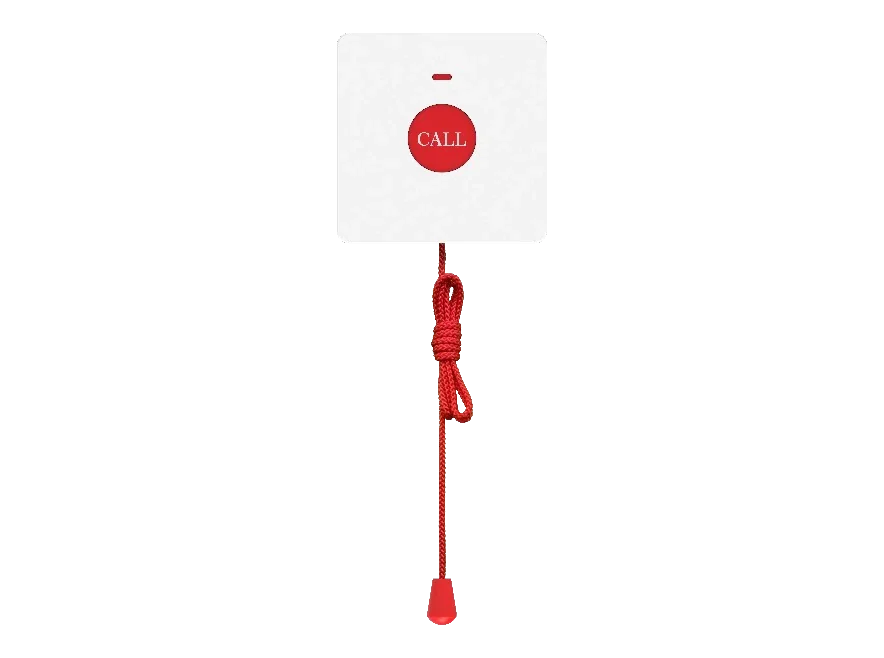
Patient room — bathroomKT30 (wireless) or KT31 (wired) pull cordA 2 m pull cord for the bathroom emergency call. KT30 is IP65 with a battery inside and a 433 MHz link over 6–25 m; KT31 is IP44, needs no power of its own and is wired to the Y501 series station.
CorridorCL-01 light and CMD-01 displayCL-01 sits over the room door, powered and controlled by the Y501 series station, with red, green, blue and yellow states. CMD-01 shows room and call information from the nurse console with up to 30 prioritised messages.
Nurse stationA320i nurse console (A308i for a smaller position)10.1-inch 1280×800 touchscreen, 20 SIP lines, up to 116 DSS keys, up to 100 devices connected, 92 dB speaker and an 8 MP camera. Prioritised colour-coded calls, password-gated emergency calls, logs, broadcasting and access control.
Ward and corridor audioFH-S01 ceiling or A212 wall speakerAmplifies incoming calls so staff elsewhere in the ward hear them; PoE supplied, up to 20 multicast zones with prioritisation. A212 adds talkback and a volume knob; FH-S01 is the ceiling option with a customisable WAV for emergency notification.
Carer on the moveW611W / W620W portable handsetIncoming calls forward to a handheld when the station is unattended. W611W is IP67 with a 1900 mAh battery (up to 9 h talk / 200 h standby); W620W has a 3000 mAh battery (up to 13 h / 240 h) and H.264 video preview.

Questions buyers ask

How many call points does a hospital ward need?

Count the bed first, then the rooms. The published plans count one bed-side station per bed, one bathroom call point per bed, a door-side station where code blue at the door is required, and one console per nurse station.

  • 50-bed clinic: 50 bed-side, 15 door-side, 15 bathroom pull cords, 15 corridor lights, 1 console, 15–20 portables. This clinic is laid out as 10 four-bed and 5 two-bed rooms across 3 shifts.
  • 70-bed nursing home: 70 bed-side stations, 70 bathroom buttons, 1 console, 15–20 portables, with 40 corridor lights and 4 displays per floor as options.
  • Round up for day rooms, treatment rooms and staff rooms, then confirm the final count on the quotation — the plans are counting templates, not site surveys.

Does a nurse call system need its own cabling?

No — that is the point of the IP design. The bed-side station is a network terminal with PoE support per the product guide, and it powers and controls the corridor light over the room door, so one network run serves the station and its indication.

  • The bathroom point needs no cable where the wireless KT30 is used: it carries its own battery and links over 433 MHz across 6–25 m indoors.
  • Where a cable already exists, the wired KT31 is used instead; it needs no power of its own and is wired back to the station.
  • Up to 10 wireless KT10/KT20/KT30 buttons can sit on one station, so a room with several call positions does not need several runs.
  • The care layouts assume cabling between room, corridor and station, and CAT5 appears on the multi-bedroom layout diagram in the source material.

What happens to a call when nobody is at the nurse station?

It escalates rather than stopping. Calls transfer automatically to the W611W portable handset when the station is unattended, and ward speakers such as the FH-S01 or A212 can amplify the incoming call so staff elsewhere in the ward hear it.

  • The CMD-01 corridor display shows the room and call status, so a carer passing in the corridor can see the call even before answering.
  • The CL-01 light over the door shows the state in red, green, blue and yellow, which identifies the room at a glance.
  • Both published plans issue 15–20 portable handsets per site precisely so a call can be answered away from the station.

How does a carer know which room is calling and how urgent it is?

Three indications run at once: the console shows the prioritised, colour-coded call, the corridor display names the room, and the light over the door shows the state. The call type itself is separated at the call point.

  • Nurse call and staff assist call show as a slow flash on the station; toilet emergency and code blue show as a quick flash.
  • Staff presence is indicated on the station, so a passing colleague knows a carer is already in the room.
  • The console carries up to 116 DSS keys, so rooms and functions sit as labelled keys rather than a memorised number list.

Can the ward system and the hospital telephone system share one PBX?

Yes, and that is the documented architecture. The care system is built on IP and SIP, and the same PBX carries the site telephony: 24 to 1000 SIP trunks across the OM range, with extensions numbered from 200 upwards.

  • Reception, ward offices, the pharmacy, the plant room and the switchboard all register as extensions on the same system.
  • Zoned paging and one-click emergency broadcast are part of the same system, so a ward announcement does not need a separate amplifier rack.
  • Integration with access control and PA systems is one of the headline points in the care material, and door phones can be combined for remote unlocking.

Can a patient call for help from the bathroom?

Yes. Both bathroom options put a 2 m pull cord at floor level: the KT30 wireless version is IP65 with a battery inside and a 433 MHz link, and the KT31 wired version is IP44 and needs no power of its own.

  • Both raise the bathroom or toilet emergency call through the station in the room, and the call type is shown differently from a routine nurse call.
  • The wireless option's working range is 6–25 m indoors, so the distance between the station and each bathroom point is a design input to check before fixing positions.
  • Bathroom points are counted per bed in both published plans — 15 in the 50-bed clinic, 70 in the nursing home — because not every building has one bathroom per bed.

Is the system certified, and does it meet our national requirements?

Nothing on this page is a certification claim. The published comparison for this care system records no third-party safety certification for the system, and the material does not state any. A compliant ward design therefore has to be confirmed against the local code by the hospital's own compliance officer and engineering adviser before it is tendered.

  • What the design does document: IP and SIP architecture, PoE supply, short-circuit inputs on the stations, colour and flash semantics for call types, and call and attendance logs.
  • What the buyer must fix locally: the emergency-call response time the code requires, whether a specific safety listing is mandatory for the call system, and how call records are retained.
  • If a tender requires a specific listing, say so at enquiry stage: it changes the system choice, and it is better answered before the ward is closed for installation.

Cabling, power and network notes

  • Stations are network devices: the Y501 series supports PoE power per the product guide, and the care layouts assume cabling between room, corridor and station — CAT5 appears on the multi-bedroom layout diagram.
  • The A320i console takes dual Gigabit ports with integrated PoE; the A308i and A330i consoles follow the same pattern.
  • KT30 carries its own battery and links over 433 MHz with a 6–25 m working range; KT31 needs no power at all but must be wired back to the Y501 series station.
  • CL-01 is powered and controlled by the Y501 series station rather than taking its own PoE run; a supplementary guide also allows an independent 12 V DC adapter.
  • Speakers are PoE: FH-S01 to IEEE 802.3af, and A212 is published as PoE 8 W / PoE+ 15 W. Mount them where the call must be heard rather than where the ceiling grid is convenient.
  • Plan the 433 MHz distance when the station and a bathroom button are far apart: the stated working range is 6–25 m indoors, and up to 10 wireless buttons can sit on one station.
  • The console needs a network drop with PoE, and on a multi-ward site the plan must say which console owns which ward before commissioning — extension ownership is what makes the escalation order work.

The call chain, from call point to console

  • Bed side: nurse call, staff assist call and staff presence from the Y501 series station.
  • Bathroom: the bathroom emergency call from the KT30 or KT31 pull cord, through the station in the room.
  • Door side: the staff emergency call and code blue from the door-side station.
  • Annunciation: colour and flash pattern on the station, the CL-01 light over the door, and the room and call status on the CMD-01 corridor display.
  • Answer: the A320i nurse console takes the call, and emergency calls require a password before the connection is made.
  • Escalation: if the station is unattended, calls transfer automatically to the W611W portable handset, and ward speakers amplify the call.

Two reference plans, counted device by device

The two sized deployments printed in the care material

Item50-bed clinic70-bed nursing home
Bed-side stations50 × Y501W-Y70 × Y501W / Y501W-Y
Door-side stations15 × Y501WNot in this plan
Bathroom pull cords15 × KT30 / KT3170 × KT30 / KT31
CL-01 corridor lights1540, optional
CMD-01 corridor displays2 per floor, optional4 per floor, optional
Nurse console1 × A320i1 × A320i
Portable handsets15–2015–20
Shift pattern3 shifts: 8:00–16:00, 16:00–24:00, 00:00–8:0015 carers plus RN and cleaners

These are the plan figures as printed in the care material; both are reference deployments, not installed projects. Use them as the counting template and confirm the site count on the quotation.

Where the ward system meets the rest of the hospital

A hospital does not buy a ward system and a telephone system as two islands if it can avoid it. The care system documented here is IP and SIP based, integrates with access control and PA systems, and supports zoned paging and one-click emergency broadcast — so it can sit on the same PBX that carries reception, the ward offices and the plant rooms.

  • Broadcasting and door phones can be combined with the care system, supporting emergency announcements, zone broadcasting, one-click calls and remote door unlocking.
  • Call and attendance logs support record tracing after an incident; where a recording server is part of the design, PBX call recording runs in G.711 and G.729.
  • The material positions the system for nursing homes and small to mid-sized hospitals, including sites upgrading from an analog or bus system.
  • Advanced feature sets such as HIS/EHR/RTLS integration and multi-nurse-station interlink are outside what this system documents — if the tender requires them, raise it at enquiry stage rather than at handover.

The site telephony side: what the same PBX carries

  • 24 to 1000 SIP trunks across five models, each trunk carrying up to 120 concurrent calls and 200 on the OM1000-UC — capacity is published in trunks because a maximum extension count is not stated.
  • Analog ports where a legacy line or a fax must stay: 4 on the OM20G, 12 on the OM50G, 48 on the OM80E and 96 on the OM200G, ordered as FXS, FXO or a mix.
  • Fax on an FXS port using T.38 or G.711 pass-through, with G.711 pass-through required over an analog line and a maximum transmission speed of 33600 bps.
  • Auto attendant and multi-level IVR with working-hours and off-hours prompts, time-of-day routing in up to 3 periods per day, and up to 32 departments for group pickup.
  • Recording in G.711 and G.729 — local and remote on the OM20G and OM50G, remote only on the larger models, with the recording server address and port 1311 in the design.
  • Call detail records to an external server on port 1809, which is how a hospital audits outbound traffic without a separate logger.

Compliance, standards and local requirements

A compliant ward design, and who confirms it

A compliant design starts with the response chain: what a call does in the first 10 seconds, who it reaches, what happens if it is not answered, and what record survives. This page sets out a chain built from IP and SIP terminals with password-gated emergency calls, automatic transfer to a portable handset and exported call and attendance logs. Whether that chain satisfies a particular national or accreditation requirement is a determination the hospital's own compliance officer makes against the applicable code — NEXVIA does not assert it.

PoE, power and the corridor circuit

The bed-side station is the powered node in the room — PoE support per the product guide — and it powers and controls the CL-01 corridor light rather than the light taking its own PoE run. Wireless buttons carry their own batteries (KT30) or need no power (KT31). Ward speakers are PoE: FH-S01 to IEEE 802.3af and the A212 published as PoE 8 W / PoE+ 15 W. Budget the switch ports per ward and keep the panel schedule with the as-built drawings.

Emergency-call priority and escalation

Nurse call, bathroom emergency, staff assist and code blue are separate events at the call point, shown with different flash patterns and colour coding, and the console displays them with priority. Emergency calls require a password before the connection is made, so the call is answered by a person rather than auto-connected. Write the escalation order — console, portable, speaker, corridor display — into the handover document and test it on each ward.

Codes vary: confirm locally before tender

Cabling practice, PoE classes, mounting heights, fire-alarm interfaces to the paging system and the retention of care records are all regulated locally, and none of it is the same in two countries. The published material records no certification for these products and no regulatory conclusion. Treat this page as the technical design input: confirm the wiring rules, the alarm interface and the record-keeping rule with the site's own engineer and compliance officer, and then match the equipment list to them.

Standards referenced

Frequently asked questions

Is the nurse call system a separate bus system?

No. It is built on IP and SIP, and the same network can carry the site telephony, access control and PA — integration with access control and PA systems is one of the headline points in the care material.

How does a carer know which room is calling?

Three ways at once: the CMD-01 corridor display shows the room and call status, the CL-01 light over the door shows the state in red, green, blue and yellow, and the console shows the prioritised, colour-coded call.

How many beds can one nurse console cover?

The console is sized on devices, not beds: the A320i supports up to 100 connected devices, 20 SIP lines and up to 116 DSS keys, with 2–4 corridor displays per floor in the reference plans. Where a floor exceeds that, a second console at another nurse station is the documented pattern.

Can the ward system integrate with our access control and public address?

Integration with access control and PA systems is stated in the care material, and the same range includes door phones for remote unlocking and SIP speakers for zone broadcasting. Bring the access-control and PA interfaces into the enquiry so they are designed in rather than added afterwards.

Can we see who attended a call, and when?

Call and attendance logs can be viewed and exported from the console, which is what the care material means by record tracing. Where the hospital also records calls, PBX recording runs in G.711 and G.729 with a recording server in the design.

Can the hospital keep its existing telephone numbers and lines?

Yes, where the lines are analog: they terminate on FXO ports — 4 on the OM20G, 12 on the OM50G, 48 on the OM80E, 96 on the OM200G — and outbound SIP calls can fall back to an analog line when the trunk fails. SIP trunks carry the rest, and the OM1000-UC is SIP only with no analog ports at all.

How does the system behave in a power or network failure?

The design answers that with redundancy rather than promises: the OM1000-UC supports dual hot standby across 3 fixed IP addresses with a 10-second health heartbeat, ETH1 and ETH2 can run as a redundant pair with a switchover in about 1.75 seconds, and outbound calls can fall back to an analog line. Analog lines on FXO ports keep working directly during an internet outage.

Project evidence

We have not published a named reference project on this page. The site does not carry customer names or installation records until the client confirms in writing which projects may be made public.

Page author: NEXVIA EngineeringPublished:Last updated:

Covers: hospital phone system · phone systems for healthcare · healthcare phone systems · hospital telephone systems · hipaa compliant phone system

All IP telephony, intercom and paging equipment in this design is supplied and integrated by NEXVIA.

Already decided on a platform, or replacing a system?

Explore Products

Related products

Planning an IP telephony project?

Send us the site type, the number of extensions or rooms and the areas to cover — we will come back with a configuration and quotation.

Send the site details

Six facts build a configuration: site type, extensions or rooms, simultaneous calls, areas to cover, existing lines and the documents you already hold. Send as many as you know — nothing has to be final before the first reply.

  • Reply within one working day
  • Configuration + quotation for your site
  • Your details are used only to answer this inquiry

* required