
Migration alternative · Mitel
An alternative to Mitel phone systems — what to assess and how to migrate
Where a site mixes desk positions with room handsets, wall phones and service points, a system change has to handle more than desk dial tone — and this page is that assessment for organisations planning a change from a Mitel phone system. It sets out what an equivalently capable SIP-based alternative looks like: what to inventory, how room and service handsets are covered, how analog ports and two-core cable are reused, how outside lines move to SIP trunks and how the cutover is phased. NEXVIA supplies and integrates the equipment. No competitor models, specifications or prices are published, and nothing here is a claim about the vendor.
- Written for sites with a mixed estate: desks, rooms, corridors and service points assessed together
- An equivalently capable alternative approach on standard SIP — one dial plan for desk phones, room handsets, wireless terminals, door stations and paging
- Room and service handsets publish 2 SIP lines with 2 to 10 programmable service keys and customisable faceplates; Wi-Fi 6, cordless and 2-wire variants cover rooms without a data outlet
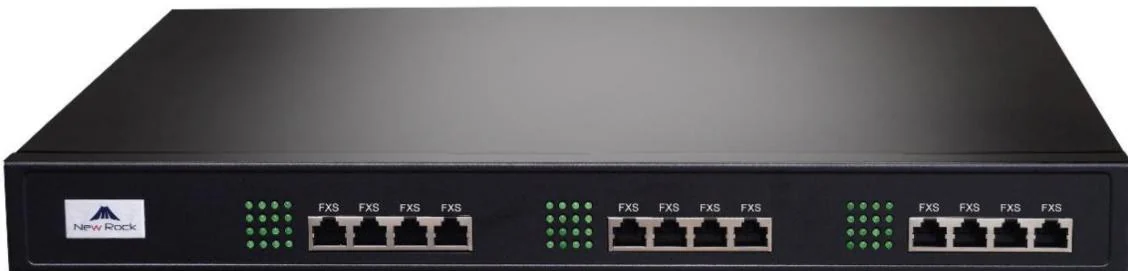
- Analog ports by card — up to 4 / 12 / 48 / 96 depending on the model — keep analog handsets, fax and alarm lines in service
- Two-core cable can be reused: PN1 up to 1600 m for network without power, PN8 and PN24 for 8 and 24 two-wire devices, with X303-2 Wire and H1-2 Wire endpoints
- No Mitel model numbers, specifications or prices are published on this site, and no disparaging statement about the vendor appears here
The short answer
A change from a Mitel system is often a change of a mixed estate: desk positions, room handsets, wall phones, service points and analog lines all have to be accounted for. The equivalently capable alternative approach here is one standards-based SIP platform for all of them: an IP PBX from 24 to 1000 SIP trunks running one dial plan across desk phones, room and service handsets, wireless terminals, door stations and paging. Room and service handsets publish 2 SIP lines with 2 to 10 programmable service keys and customisable faceplates, so a service list is printed on the handset where the site needs one.
Analog and cable-bound positions do not disappear in that plan. The IP PBX carries analog ports by card — up to 4, 12, 48 or 96 depending on the model — and the GA10 puts a single analog telephone on the network with 2 SIP lines and one FXS port. Where a room or a wall position has only a two-core pair, the PN1 carries network and power over it (up to 1600 m for the network function without power) and the PN8 and PN24 switches carry 8 and 24 two-wire devices at up to 300 m for network plus power; X303-2 Wire and H1-2 Wire are the endpoints on that pair.
The change itself is phased the same way as any other: numbering starts at 200 and can follow your scheme, ring groups take up to 40 members, and a phone with several SIP accounts can hold registrations on both systems while its block is moved, so rooms, floors or buildings can change a group at a time. Send the room and position list, the service-key layout and the line types, and the model list and current facts are confirmed on the quotation — no Mitel models, specifications or prices appear on this site.
Migration decision sheet
| Decision area | What to inventory | How we handle it |
|---|---|---|
| Room and service handsets | H6W, H5/H5W, H4/H4W, H3/H3W, H2U, H1, H602/H602W, H601/H601W, H603W, H1-2 Wire | 2 SIP lines with 2 to 10 programmable service keys and customisable faceplates; Wi-Fi 6 and cordless models where there is power but no data outlet; the H1-2 Wire takes network and power over an existing two-core pair |
| Desk and back-office positions | X301 group, X303 group, X3U, X4U, X5U, X6U, X210 and the V Series models | 2 to 20 SIP lines with 30 to 116 DSS keys for line status and speed dialling; dual Gigabit ports with integrated PoE on the P, G, W and XU variants, so a desk needs one cable |
| Reception, operator and paging positions | A320i, A330i, A308i, X210i consoles; CA600, CA400 conference terminals; A212, A201 speakers | Consoles with goose-neck microphones, speaker output up to 92 dB and up to 116 DSS keys for paging, broadcast and answering; ceiling and wall SIP speakers for zones; conference terminals for meeting rooms on the same dial plan |
| Keep the analog lines and special services | Analog ports by card (up to 4 / 12 / 48 / 96); GA10 adapter; fax on FXS; alarm and lift lines assessed per device | Analog handsets, fax machines and single-line devices stay in service: GA10 for one analog telephone, FXS ports on the PBX for several, with fax as T.38 or G.711 pass-through and the analog line available as an escape route for outbound calls. |
| Decide the wiring per building | Data outlets and PoE ports, existing two-core cable, wall and corridor positions, rooms that cannot be re-cabled | PoE phones where cable exists; PN1 over a two-core pair up to 1600 m for the network function without power; PN8 and PN24 for 8 and 24 two-wire devices at up to 300 m for network plus power; X303-2 Wire and H1-2 Wire as the desk and room endpoints. |
| Switch the outside lines and phase the cutover | SIP trunks, analog lines kept on FXO, DID numbers published to callers, single-window or phased change | SIP trunks as direct, registration or registered-by with TLS; analog lines kept as the escape path; published numbers bound through DID/DOD; blocks of rooms or floors cut over one at a time with both dial plans answering in between. |
| Rebuild the service behaviour | Ring groups and distribution, night and time-of-day routing, wake-up calls, room-status and front-desk workflows, voicemail | Ring groups up to 40 members in sequential, rotating or simultaneous mode; auto attendant with time-of-day routing; wake-up calls, call recording in G.711 and G.729 and voicemail retrieval as published features of the platform. |
The rows below are decisions and options, not claims about another vendor: this site publishes no competitor model numbers, specifications or prices.
Other migration pages
Avaya alternative
Planning a change from an Avaya phone system: what to inventory, how analog handsets and cabling can be kept, and how a SIP system is phased in alongside the existing one.
Read moreCisco alternative
Assessing an alternative to a Cisco phone system: dial plan, ring groups, pickup and paging rebuilt on a SIP platform, with the existing cabling and analog lines kept where they work.
Read moreNEC alternative
Assessing an alternative to an NEC phone system for a small or mid-size office: keep the analog lines as a fallback, keep the numbers, and move to SIP in planned steps.
Read moreWhat an alternative to Mitel means on this page
It means an equivalently capable alternative approach for a mixed estate: one SIP platform carrying desk positions, room and service handsets, wireless terminals, door stations and paging, with the analog and cable-bound positions handled explicitly rather than abandoned.
No Mitel models, specifications or prices are published on this site, and no judgement about the vendor is made. What is published is the inventory-driven assessment: the endpoint types the estate needs, the published figures for each one, and the migration decisions that follow from them.
- One dial plan across desks, rooms, corridors, entrances and paging — not a separate system per building type
- Standard SIP as the base: registration over SIP with TLS and SRTP options, DTMF as RFC2833, in-band or SIP INFO, codecs covering G.711, G.729A, G.722 and G.722.2
- Platform size from the count: 24 SIP trunks on the OM20G through 1000 on the OM1000-UC, with analog ports from none to 96
- Nothing about the existing vendor is disparaged, and no statement about their equipment is made on their behalf
Where the assessment needs a fact about the installed equipment, we say so and confirm it with you — this site does not fill the gap with an assumption.
The migration path, step by step
Rooms, corridors and service points make a changeover visible to more people than a desk-only migration, so the sequence below moves the work in blocks and keeps the service list intact at each step.
- 1. Inventory by area. Rooms, suites, service corridors, entrances, back-of-house and desks, each with its number, device type and cable.
- 2. Choose the endpoint per position. Desk phone, room handset with the right number of service keys (2 to 10 published), wireless handset where the person moves, or a console where announcements and answering share the position.
- 3. Keep the analog positions. GA10 for a single analog telephone (2 SIP lines, 1 FXS port); FXS ports on the IP PBX for several, up to 4 / 12 / 48 / 96 by model; fax as T.38 or G.711 pass-through.
- 4. Settle the wiring area by area. One PoE cable where a data outlet exists; PN1 on a two-core pair (up to 1600 m for network without power); PN8 and PN24 for 8 and 24 two-wire devices at up to 300 m for network plus power; X303-2 Wire and H1-2 Wire at the endpoints.
- 5. Move the outside lines. SIP trunks as direct, registration or registered-by with TLS, and analog lines kept on FXO ports as the escape route when a SIP trunk call times out or returns 4xx/5xx/6xx.
- 6. Rebuild the service behaviour. Numbering starts at 200 and can follow the existing scheme; ring groups up to 40 members; queues of up to 20 waiting calls; auto attendant with time-of-day routing; wake-up calls and voicemail as published features.
- 7. Phase the cutover. Rooms, floors or buildings change a block at a time; a multi-account phone can hold registrations on both systems while its block moves, and the old system answers until the last position has changed.
- 8. Confirm the current facts. Model list, port cards, line types and firmware positions are confirmed in writing on the quotation, against your inventory.
What usually stays, and what it needs
The reuse assessment for a mixed estate concentrates on three things: analog ports, the cable to the position, and the service keys a handset has to carry. Each row pairs the existing element with the published figure that decides it.
Reuse assessment for a changeover to a SIP system, with the published figures
| Existing element | Can it stay? | What it needs |
|---|---|---|
| Room and wall handsets with a service list | Replaced, with the service list preserved | 2 SIP lines and 2 to 10 programmable service keys by model, with customisable faceplates; Wi-Fi 6 and cordless variants where there is no data outlet |
| Analog telephones and single-line devices | Yes | GA10 adapter (2 SIP lines, 1 FXS port) or an FXS port on the PBX card — up to 4 / 12 / 48 / 96 by model |
| Fax machines | Yes | FXS port or GA10; faxing as T.38 or G.711 pass-through, with T.38 recommended where both ends support it |
| Analog outside lines | Yes — useful as the fallback | FXO port on the IP PBX; an outbound SIP trunk call that times out or returns 4xx/5xx/6xx escapes to the analog line |
| Two-core cable to a room or wall position | Often yes | PN1 converter up to 1600 m for network without power; PN8 or PN24 for 8 / 24 devices at up to 300 m for network plus power; X303-2 Wire and H1-2 Wire endpoints |
| Corridor and zone speaker lines | Yes | PA2S or PA3 paging gateway at 10–30 W mono output, plus SIP ceiling and wall speakers for new zones |
| Entrances, gates and service doors | Replaced or integrated | SIP door and indoor stations with release relays, registered on the same dial plan as the room and desk handsets |
Service keys, wireless options and cable distances on the replacement hardware are printed from the product documentation; where a value is not stated for a model, this site says so instead of estimating.
What this site does not publish
No competitor models, specifications or prices appear on this site, and no comparative or disparaging claim about another vendor is made. A migration assessment built on the buyer's own inventory is more useful than one built on second-hand comparison data, and it is the only kind this site can support honestly.
Where a project needs a verified fact about the installed system or about a specific service expectation, the answer is confirmed in writing with you. The published capacities, ports, key counts, codecs and cable distances on this page are carried from the product documentation and confirmed on the quotation.
- No competitor models, specifications or prices — none are held, so none are printed
- No vendor is disparaged anywhere on this site, and no judgement about another vendor's equipment is made or implied
- The trademark notice below names the relationship plainly: NEXVIA is not affiliated with, endorsed by or sponsored by the vendors named
- Published figures belong to the manufacturer, printed as they stand and confirmed in writing
Frequently asked questions
Do you publish a comparison between your system and a Mitel system?
Can room handsets keep their service functions?
What happens to rooms with no data outlet?
Can we keep analog lines and analog telephones?
How is the change phased across a building or an estate?
Do you supply the whole system, or only the phones?
Relationship and trademark notice
NEXVIA manufactures its own range of IP telephony equipment — PBX systems, SIP phones, hotel handsets, nurse call, intercom and public address — and integrates it for the site: design, manufacture, supply, commissioning and after-sales support.
This page is a migration assessment written from public, verifiable information: the published figures of the equipment NEXVIA supplies. It publishes no competitor model numbers, specifications or prices, and it makes no comparative or disparaging claim about another vendor. What to assess is decided by your own inventory and requirements.
All trademarks named on this page — including Avaya, Cisco, Mitel and NEC — are the property of their respective owners. NEXVIA is not affiliated with, endorsed by or sponsored by those vendors. A vendor name is used only to identify the system a buyer may be planning to change from; it is not a statement about that vendor's products.
mitel alternative · mitel replacement · migrate from mitel · mitel to sip · mitel phone system replacement
Page author: NEXVIA EngineeringPublished:Last updated:
Covers: mitel alternative · mitel replacement · migrate from mitel · mitel to sip · mitel phone system replacement
Equipment on this page is supplied and integrated by NEXVIA; no competitor specifications or prices are published on this site.
Explore Products
Related products
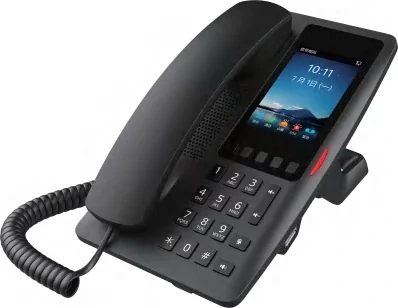
H6W
Five named service keys, Wi-Fi 6 and an AP mode that acts as a room router.
- 2 SIP lines
- 3.5-inch 320×480 screen
- Wi-Fi 6 dual band
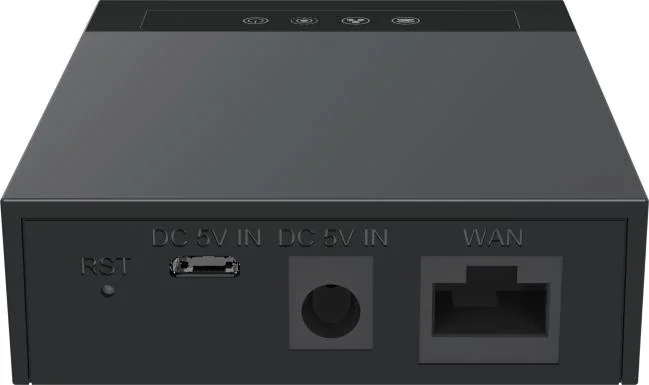
GA10
Two SIP lines and one FXS port, so an analog phone joins the IP system.
- 2 SIP lines
- 1 FXS (RJ11) port
- Micro USB DC 5V/1A
OM80E
Rack-mount PBX for 48 analog ports with AC or DC power.
- Up to 48 analog ports
- 216 SIP trunks
- AC 100–240 V or −48 V DC
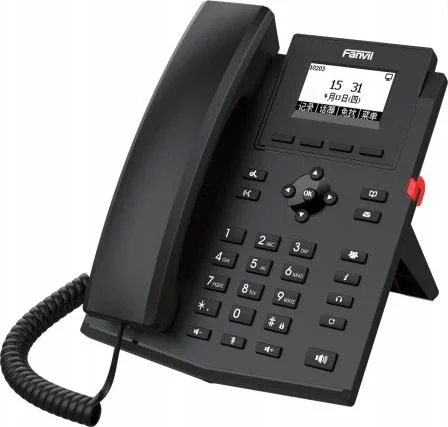
X301G
Two-line X300 phone with Gigabit ports and integrated PoE.
- 2 SIP lines
- 2.3-inch dot-matrix
- Dual Gigabit + PoE
Planning an IP telephony project?
Send us the site type, the number of extensions or rooms and the areas to cover — we will come back with a configuration and quotation.
Send the site details
Six facts build a configuration: site type, extensions or rooms, simultaneous calls, areas to cover, existing lines and the documents you already hold. Send as many as you know — nothing has to be final before the first reply.
- Reply within one working day
- Configuration + quotation for your site
- Your details are used only to answer this inquiry