
Platform compatibility · Zoom Phone
Zoom Phone-compatible desk phones — a buyer checklist
Zoom Phone is a cloud phone service and it publishes its own list of compatible phones; that list belongs to Zoom, it changes, and this site does not copy it. What can be documented here is the phone side of the question: the protocol and feature requirements a desk phone has to satisfy — standard SIP registration, transport and encryption, DTMF, codecs, programmable keys, provisioning — together with the published figures for the models in this catalogue, from a two-line entry phone to a twenty-line desk phone and the wireless, door and paging devices that share the same extension plan. NEXVIA supplies and integrates the equipment; the platform side is configured by whoever administers the Zoom account.
- The platform compatible-device list is published by Zoom and changes with plan, region and firmware — it is checked there, not reproduced here
- Phone-side requirements documented in full: SIP registration on port 5060 by default, UDP or TCP transport, TLS signalling and SRTP media
- DTMF method must match — In-band, RFC2833 or SIP INFO — and RFC2833 is the documented standard method
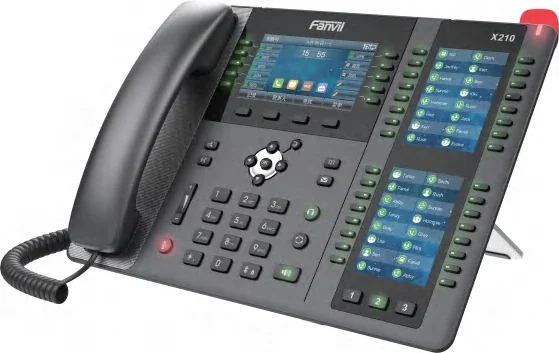
- Desk positions from 2 SIP lines (X301 group) to 20 (X7, X7C, X210), with key fields of 30 to 116 DSS keys for presence and speed dialling
- Wireless and shared areas covered: DECT bases up to 300 handsets per system, Wi-Fi handsets, room handsets and paging gateways
- Provisioning documented as DHCP option 66, TR069/TR104/TR106 and SIP PnP, with central device management named in the manufacturer material
The short answer
Zoom Phone runs as a cloud service and publishes its own compatible-device list; the useful work is to check a phone against that list and against the protocol requirements behind it. On the phone side the requirements are concrete: register as a SIP extension with the server address, username, password and display name on port 5060 by default, over UDP or TCP, with TLS for signalling and SRTP for media where encryption is required; match the DTMF method (In-band, RFC2833 or SIP INFO); and carry the codecs in use — G.711 for compatibility, G.722 and Opus for wideband, G.729 where bandwidth is tight.
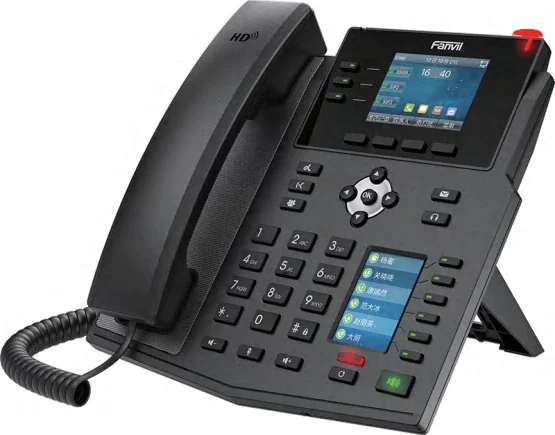
The catalogue covers the desk bands a rollout needs. Entry positions run on 2 SIP lines (X301 group) or 4 (X303 group) with a 6-way conference; the middle of the range adds a second screen for keys — 30 DSS keys on the X5U and X4U, 60 on the X6U; and the 20-line models (X7, X7C, X210, and the V Series screen phones) carry up to 106 to 116 DSS keys for busy-lamp fields and speed dials. Dual Gigabit ports with integrated PoE are published across the larger models, which keeps a desk to one cable.
For areas a desk phone does not reach, the same plan continues: DECT handsets publish up to 30 handsets per base and 300 per system, Wi-Fi handsets carry up to 16 DSS keys with a push-to-talk key documented for quick dial, intercom and multicast, room handsets publish 2 SIP lines with 2 to 10 service keys, and the GA10 puts an analog telephone on the network with 2 SIP lines and one FXS port. Send the platform plan, the region and the extension count, and the current position against the published Zoom list is confirmed on the quotation.
Capability matrix — what the platform actually uses
| Capability | Models in the catalogue | What it means when the phone registers |
|---|---|---|
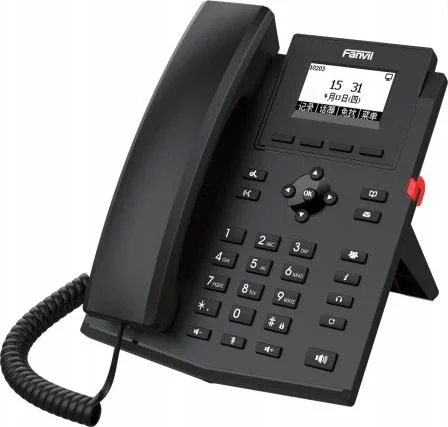
| Entry desk phones | X301, X301P, X301G, X301W, X303, X303P, X303G, X303W | 2 and 4 SIP lines on a 2.3-inch or 2.4-inch screen with a 6-way conference; the P, G and W suffixes state integrated PoE, dual Gigabit ports and dual-band Wi-Fi, so a rollout can standardise on PoE or on a wall socket per floor |
| Colour-screen desk phones with key fields | X5U, X5U-R, X4U, X6U, X3U / X3U Pro, X210, X7, X7C | A second screen for line and DSS keys on the XU family — 30 keys on the X5U and X4U, 60 on the X6U — and up to 106 keys on the X210; 6 to 20 SIP lines with dual Gigabit PoE ports and a 6-way conference |
| Cordless and wireless handsets | W610D with W710D / W710H bases; W610W, W611W, W620W; W601H | DECT coverage engineered per floor with up to 30 handsets per base and 300 per system; Wi-Fi handsets where the site already runs a managed wireless network, with up to 16 DSS keys and a push-to-talk key for quick dial, intercom and multicast |
| Room and shared-area handsets | H6W, H5/H5W, H4/H4W, H3/H3W, H2U, H1, H602/H602W, H601/H601W, H603W | 2 SIP lines with 2 to 10 programmable service keys and customisable faceplates for guest rooms, clinics, reception points and service corridors; Wi-Fi 6, cordless and 2-wire variants cover rooms without a data outlet |
| Meeting rooms and speakerphones | CA600, CA400, CA200, CS20, CS40 | Conference terminals whose audio is built for a room rather than a desk — the CA600 publishes a 12-microphone 360-degree array with dual 10 W speakers — registered on the same SIP system as the handsets |
| Paging, speakers and door positions | PA3, PA2S; A212, A201; A12/A12V, i16S, i11S, i10S, i67 | Paging gateways with 10–30 W mono output for an existing speaker line, SIP speakers for ceiling and wall zones, and door stations that register as SIP endpoints with relays for door release |
The rows below are capabilities and published figures, not certifications: no model on this page is described as certified for any platform, and no supported-device list published by a platform vendor is reproduced here.
Other platform compatibility pages
3CX-compatible SIP phones
What a SIP phone has to support to sit on a 3CX phone system, and how the current position is checked against the platform's own published list.
Read moreMicrosoft Teams phones
Two routes to a Microsoft Teams phone position: a native device from Microsoft's own published list, or a standards-based SIP phone joined at a documented SIP interface.
Read moreWhat compatibility means before you buy
A cloud phone service asks two things of a desk phone: that the platform supports the device, and that the device supports the protocols. The first belongs to the platform and is answered by its published list, version by version. The second is answered on this page, with the published figures printed beside each requirement.
Work through the table and a rollout divides itself into desk bands: entry phones where only answering and transferring are needed, screen phones where presence and speed dials are wanted, wireless where the person is not at a desk, and gateways where the line itself stays analog.
Requirements behind a Zoom Phone desk-phone decision, against the published figures of this catalogue
| Requirement | What the phone has to do | What this catalogue publishes |
|---|---|---|
| Registration | Register as a SIP extension with server address, username, password and display name | Standard SIP across the range, port 5060 by default, signalling over UDP or TCP with TLS available |
| Signalling and media encryption | TLS for SIP signalling; SRTP for the audio path where the deployment requires it | TLS and SRTP options documented on the platform side with SIP signalling and voice-payload encryption; SRTP/SIPS/TLS published for the DECT bases |
| DTMF | In-call keypresses have to reach IVR menus, PIN entries and voicemail | In-band, RFC2833 or SIP INFO, selectable on the GA10 and the desk-phone and gateway datasheets |
| Codecs | Carry the codec set the platform negotiates, with a narrowband fallback | G.711U/A, G.722, G.729A/B, G.726, iLBC, Opus; G.729 named for IP telephony where bandwidth is limited |
| Keys and presence | Line keys, busy-lamp fields, speed dials and pickup for team answering | Up to 116 on-screen DSS keys (A Series, V67, V66), 106 (X210, X210i), 60 (X6U), 30 (X5U, X4U); 3 to 5 LED line keys on the XU models |
| Provisioning | Push configuration to many phones without touching each one | Auto provisioning over DHCP option 66, TR069/TR104/TR106 and SIP PnP; the manufacturer material names its provisioning and device-management services |
| Power and cabling | One cable per desk, or a phone that works on what is already in the wall | Integrated PoE on the P, G and W variants of the X300 Series and across the XU and X Series models; 2-wire products for buildings that cannot be re-cabled |
| Positions with no outlet | A working handset in a store, a plant room or a room with one old pair | DECT and Wi-Fi handsets from the W Series; the H1-2 Wire and X303-2 Wire endpoints on existing two-core cable |
What only the platform can confirm
Zoom publishes and maintains its own list of compatible phones, and that list varies by plan, region and firmware release. This site does not reproduce it, does not imply that a model is on it, and does not describe any phone here as Zoom-certified. Where a project depends on the platform's own list, the check is made against the published Zoom documentation for the version and region in question.
What NEXVIA contributes is the other half of the answer and a clean handover between the two: the published protocol and feature figures for each model, the accessory and provisioning facts, and a written confirmation on the quotation of the position current at that moment.
- Platform side: the compatible-device list, the plan and region rules and any per-firmware requirement — published by Zoom and checked there
- Phone side: registration, transport, encryption, DTMF, codecs, keys, PoE, provisioning — documented on this page
- Firmware and platform releases both move; the position is confirmed at quotation time rather than frozen on a page
- No certification claim is made here, and no platform partnership is implied
A compatibility table copied from impression is worse than none. Where we cannot quote a source, this site says so and confirms the fact with you in writing instead.
Choosing per position
Cloud telephony rollouts usually mix four kinds of position, and the published figures make each one a shortlist. A desk that answers and transfers needs a 2 or 4-line phone; a desk that watches a team needs a key field and a second screen; a person who walks between rooms needs DECT or Wi-Fi; and a room or a gate needs a handset or a station that stays in service without a computer next to it.
- Reception and operators: X6U, X210 or an A Series console where announcements and answering share the position
- Standard desks: X303 group for four lines with PoE variants, or X301 group where two lines are enough
- Supervisors and busy teams: X5U or X6U with 30 to 60 DSS keys, or X7/X7C where a 5-inch or 7-inch touch screen is wanted
- Mobile staff: W610D on a W710D or W710H base, or the W611W and W620W on the site Wi-Fi
- Rooms, service corridors and gates: H Series handsets, the i16S and i11S door stations and the PA2S or PA3 paging gateways
If you need the phone system behind the phones
NEXVIA designs and supplies IP PBX systems as well as handsets, which matters when part of the estate stays on a private system while cloud telephony covers the rest. The OM series runs from 24 to 1000 SIP trunks, with analog ports from none to ninety-six, and the product manual documents platform compatibility that names CallManager, Broadsoft, Skype for Business, Huawei IMS and Asterisk.
The manual statement is quoted as the manual prints it and is not extended here. Its practical value on a mixed estate is simple: the same desk phones and the same DECT handsets can register to the private system or to a cloud plan, so the hardware decision does not have to be remade when the platform decision changes.
- 24 to 1000 SIP trunks across five models, with up to 120 concurrent calls per trunk on the OM20G and OM200G
- SIP trunks as direct, registration or registered-by, with TLS available and SRTP selectable for the media
- Recording in G.711 and G.729, voicemail, auto attendant and ring groups of up to 40 extensions
- T.38 or G.711 pass-through for fax on an FXS port, and DID/DOD binding on the OM1000-UC
- Migration aids that keep a changeover gradual: 2-wire products, ATA gateways and analog escape routes
Frequently asked questions
Are the phones on this site Zoom-certified?
How do we confirm a specific model against Zoom Phone?
Which codecs and DTMF settings should be used?
Can we keep an analog telephone or an analog line?
What is needed to roll out many phones quickly?
Can DECT and Wi-Fi phones sit on the same plan?
Does NEXVIA supply the phone system as well?
Relationship and trademark notice
NEXVIA manufactures its own range of IP telephony equipment — PBX systems, SIP phones, hotel handsets, nurse call, intercom and public address — and integrates it for the site: design, manufacture, supply, commissioning and after-sales support.
This page describes the protocol and feature requirements a telephone has to satisfy to register on a third-party platform. It does not claim platform certification, and it does not reproduce any platform vendor's supported-device list; the current position is confirmed against that vendor's own published documentation at quotation time.
All product and platform names on this page — including 3CX, Microsoft Teams and Zoom — are trademarks or registered trademarks of their respective owners. NEXVIA is not affiliated with, endorsed by or sponsored by those vendors, and their names are used only to describe the interoperability requirements of a standards-based SIP telephone.
zoom certified phones · zoom phone compatible phones · zoom desk phone · sip phone zoom phone · zoom phone hardware
Page author: NEXVIA EngineeringPublished:Last updated:
Covers: zoom certified phones · zoom phone compatible phones · zoom desk phone · sip phone zoom phone · zoom phone hardware
Equipment on this page is supplied and integrated by NEXVIA; platform names are used to describe interoperability requirements only.
Explore Products
Related products
X4U
Twelve-line XU Series desk phone with a side screen for its 30 keys.
- 12 SIP lines
- 2.8-inch + 2.4-inch
- 30 DSS keys
X301G
Two-line X300 phone with Gigabit ports and integrated PoE.
- 2 SIP lines
- 2.3-inch dot-matrix
- Dual Gigabit + PoE
OM20G
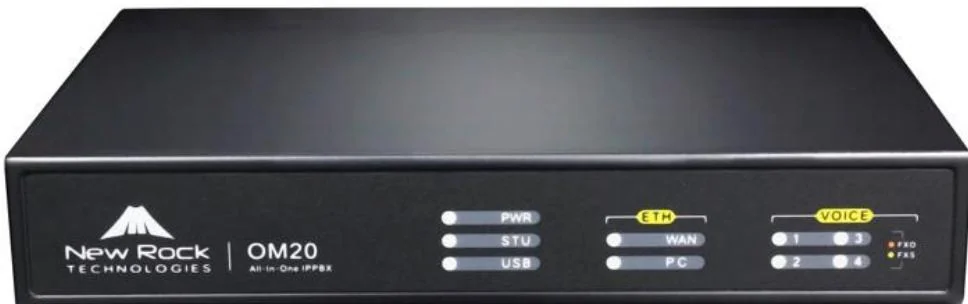
Entry-level all-in-one IP PBX for small offices and branch sites.
- Up to 4 analog ports
- 24 SIP trunks
- 16 GB storage
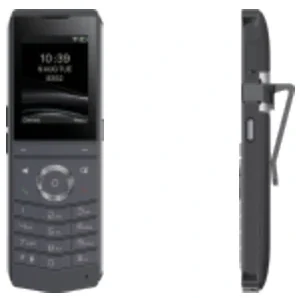
W611W
An IP67 Wi-Fi 6 handset for staff who carry a phone all shift.
- IP67 rated
- Wi-Fi 6 dual band
- 9 h talk / 200 h standby
Planning an IP telephony project?
Send us the site type, the number of extensions or rooms and the areas to cover — we will come back with a configuration and quotation.
Send the site details
Six facts build a configuration: site type, extensions or rooms, simultaneous calls, areas to cover, existing lines and the documents you already hold. Send as many as you know — nothing has to be final before the first reply.
- Reply within one working day
- Configuration + quotation for your site
- Your details are used only to answer this inquiry