Healthcare
Nurse call for a ward: positions and escalation
On this page
- Start from positions, not devices — what should you know?
- The call types, and how staff tell them apart — what should you know?
- Escalation: the console is one link, not the whole chain — what should you know?
- The questions that decide the bill of materials — what should you know?
- Designing the wiring in parallel — what should you know?
Start from positions, not devices — what should you know?
The most common mistake in a ward system is to count rooms and order one device per room. A ward is not a grid of rooms; it is a set of positions where a call can start, and each position exists because a different person raises a different kind of call.
- Bedside: the resident or patient calls the nurse, asks for assistance, or records presence. One station per bed.
- Door side: staff raise an emergency or code blue call as they enter or leave, and record their own presence. One station per room.
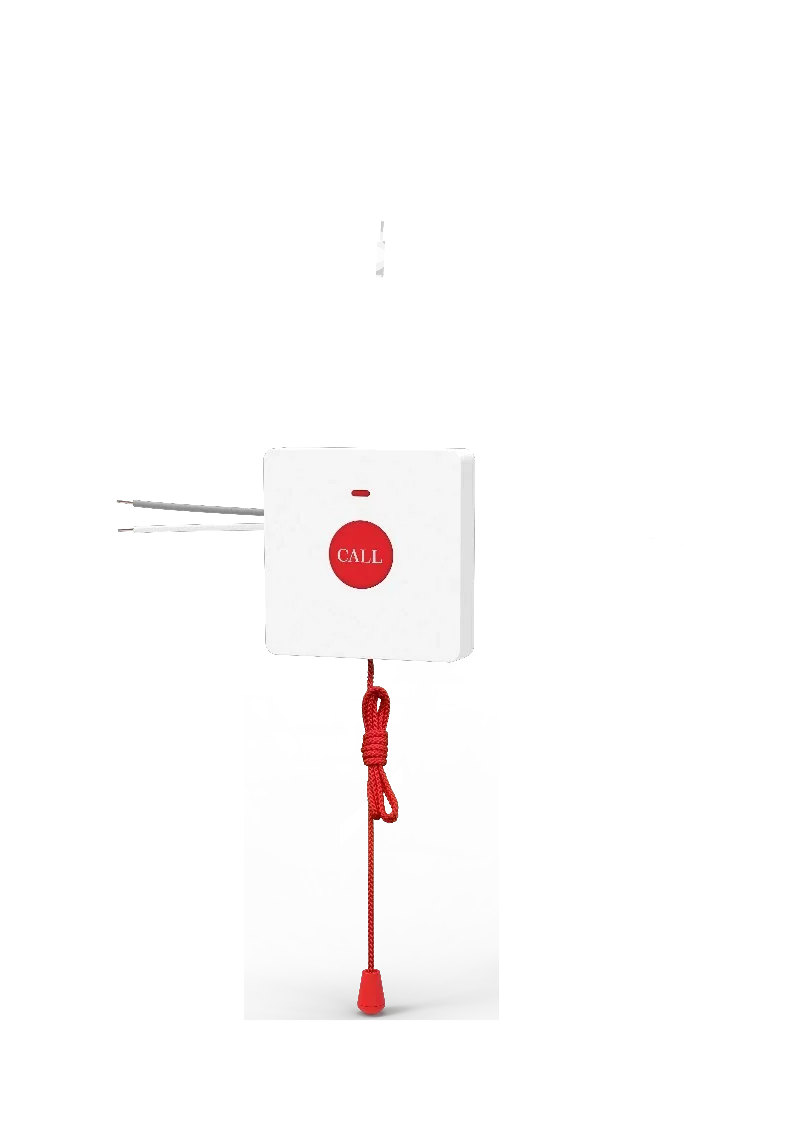
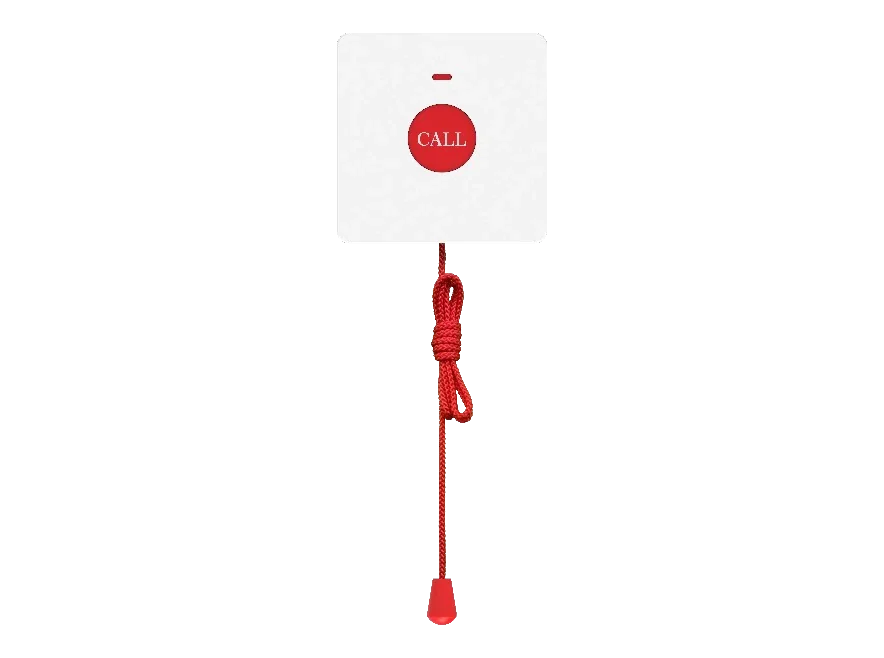
- Bathroom: a call that has to be reachable from floor level. One pull cord per bedroom, wired or wireless.
- Corridor, at the door: a lamp that repeats the call status outside the room so staff walking past can see it without entering.
- Corridor, public area: a display that shows the room and the call type to everyone in the corridor.
- On the move: a portable handset that takes the call when the station is unattended.
Count each of those separately and the numbers stop being confusing. In the 70-bedroom plan in our material, 70 bedside stations sit in 40 rooms, because ten rooms are single and the rest are two-bed; the bathroom pull cord and the corridor light are counted once per bedroom and once per room respectively, so the three totals differ on purpose.
The call types, and how staff tell them apart — what should you know?
| Call type | Where it starts | Indication |
|---|---|---|
| Staff presence | Bedside or door-side station | Recorded on the station; the indication is distinct from a call |
| Nurse call | Bedside station | Slow flash |
| Toilet / bathroom emergency | Pull cord | Quick flash |
| Staff assist call | Bedside or door-side station | Slow flash |
| Code blue | Door-side station | Quick flash, treated as the highest priority |
The difference between a routine call and an emergency is carried by the flashing pattern first, and by colour at the console second. That is deliberate: a nurse walking past a door reads a flash pattern at a glance, in a way a small screen cannot deliver.
Escalation: the console is one link, not the whole chain — what should you know?
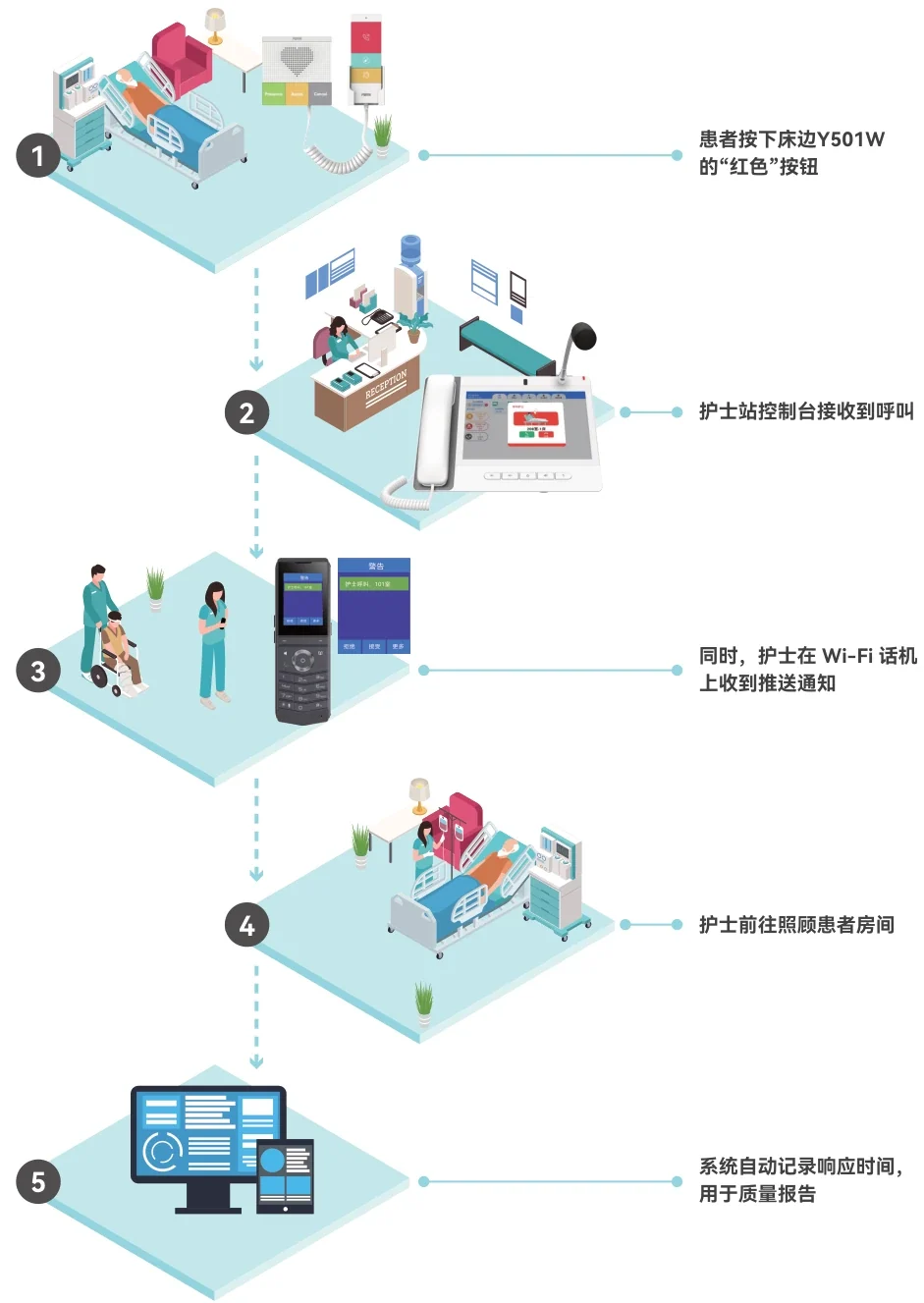
A ward system that only rings a desk fails the moment the desk is empty. The architecture in this range has four stages:
- Room: the station raises the call and the corridor light over the door changes state, powered and controlled by the bedside station itself.
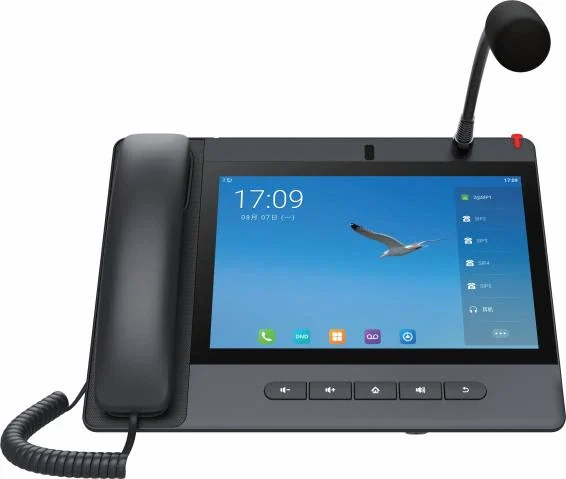
- Console: the nurse console shows a prioritised, colour-coded entry with the room, and keeps call and nurse attendance logs. The material states that a password has to be entered before an emergency call is connected, so a real person answers rather than a recording.
- Corridor display: the console pushes the call status and location to a corridor display, which carries up to 30 prioritised messages on a 128x32 dot-matrix panel and is multilingual.
- Handset: where the station is unattended, calls can be forwarded to a portable Wi-Fi handset, so the call follows the caregiver.
Broadcasting is the fourth channel: the care material states zoned paging and one-click emergency broadcast as system functions, and the corridor and ceiling speakers amplify incoming calls so they are heard away from the desk. Integration with access control and with a PA system is stated as part of the same solution, which matters where a ward door has to be released during an intercom call.
The questions that decide the bill of materials — what should you know?
- Wired or wireless pull cord? The wireless KT30 is IP65 with a 433 MHz link over a working range of 6 to 25 m and a battery inside; the wired KT31 is IP44 with a 2 m cord and needs no power of its own. Wireless costs no cable; wired costs no battery replacement.
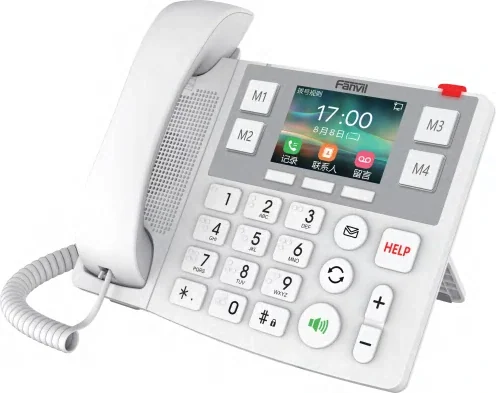
- Does the button suit the host? The KT30 and KT31 work with the Y501 series station; the KT10 and KT20 wireless buttons work with both the Y501 series and the X305 big-button phone, which can host up to ten of them.
- How many devices per console? The care guide states that up to 100 devices can be connected to a console, and the two printed plans place one console on a 50-bed clinic and one on a 70-bedroom home. Confirm against your own ward count, since the limit is the console, not the wing.
- What powers the stations? The material states PoE for the mini intercoms and speakers, and states that the KT31 needs no power while the KT30 runs on a battery. PoE for the Y501 series is stated only in the product guide, so it belongs on the confirmation list rather than in an assumption.
- Who answers at night? The portable-handset count is driven by the shift pattern, not the bed count. The printed plans propose 15 to 20 handsets against a care team of 15 plus the RN.
Designing the wiring in parallel — what should you know?
These are IP devices, so the ward needs structured cabling and PoE switching like any other network. The layout diagrams in the care material are drawn on CAT5, and the terminals register as SIP endpoints. Practically, that means the ward's cabling, the PBX and the care devices should be designed together: the corridor display and the console need network drop positions as surely as the bedside stations do, and the wireless pull cords need their host station within radio range - 6 to 25 m through the wall of a bathroom.