Healthcare
Hospital phone system compliance checklist
On this page
- Why this article is a checklist, not a claim — what should you know?
- What the documentation does state — what should you know?
- What the documentation does not record — what should you know?
- What the ward design does state, in numbers — what should you know?
- The questions only your side can answer — what should you know?
- What to ask a supplier for
Why this article is a checklist, not a claim — what should you know?
Care and hospital projects are bought against a code, a procurement policy or an accreditation requirement, and none of those are the same in two countries. We are a manufacturer and system integrator: we build the terminals and PBXs in our own plant, and we design, supply and commission the system. That means the honest way to write about compliance is to separate three things clearly - what the product documentation states, what it does not state, and what only your own compliance officer can decide.
Everything below is drawn from the manufacturer materials supplied with this product range. Where they are silent, this article says so rather than filling the gap.
What the documentation does state — what should you know?
| Requirement area | What is documented |
|---|---|
| Emergency call answered by a real person | An emergency call requires a password before the call is connected, so a recording cannot stand in for the recipient |
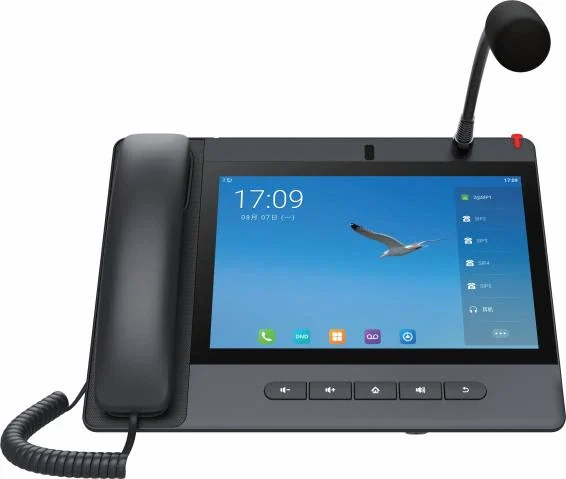
| Escalation beyond the desk | Calls transfer automatically to a portable handset when the nurse station is unattended; the corridor light and the corridor display repeat the call outside the room |
| Record tracing | Call and nurse attendance logs are kept, viewable and exportable from the console |
| Priority and call type | Prioritised, colour-coded entries on the console; slow flash for nurse call and staff assist, quick flash for toilet emergency and code blue |
| Mass notification | Zoned paging and one-click emergency broadcast are system functions; broadcast can also be sent to analog extensions. Two-way broadcast is not supported by the range |
| Voice recording | Recording runs in G.711 and G.729; from the OM80E upwards recording is to a server (default port 1311), while the OM20G and OM50G also record locally |
| Access control on the system | Login lockout with a default of six failed attempts per day and a ten-minute lock, an access whitelist of up to 20 addresses, 802.1X port authentication, and TLS and SRTP options for signalling and voice |
| Call permission by extension | Five levels - internal only, local, domestic (default), international and barred - plus call barring by weekday and time band |
| Hygiene-adjacent materials | Antibacterial materials and detachable function buttons on the bedside station, and an antibacterial handset on one cordless care handset model |
What the documentation does not record — what should you know?
These are the items that must not be assumed, and where a supplier cannot help by asserting them:
- Third-party safety listings for the care range. The care solution material's own comparison table records that these IP care terminals do not hold the national electrical-safety listing that some analog and hybrid nurse-call systems hold, and names the listing classes such systems carry instead. That line is a gap disclosure, not a certificate, and it is the single most important sentence in the dossier for a compliance-driven buyer.
- A healthcare-specific certification or accreditation. Nothing in the materials claims one, and we do not either.
- Power autonomy figures. Neither the stations nor the consoles publish a battery-backed runtime. Standby power is a site design decision, and the equipment list does not include it.
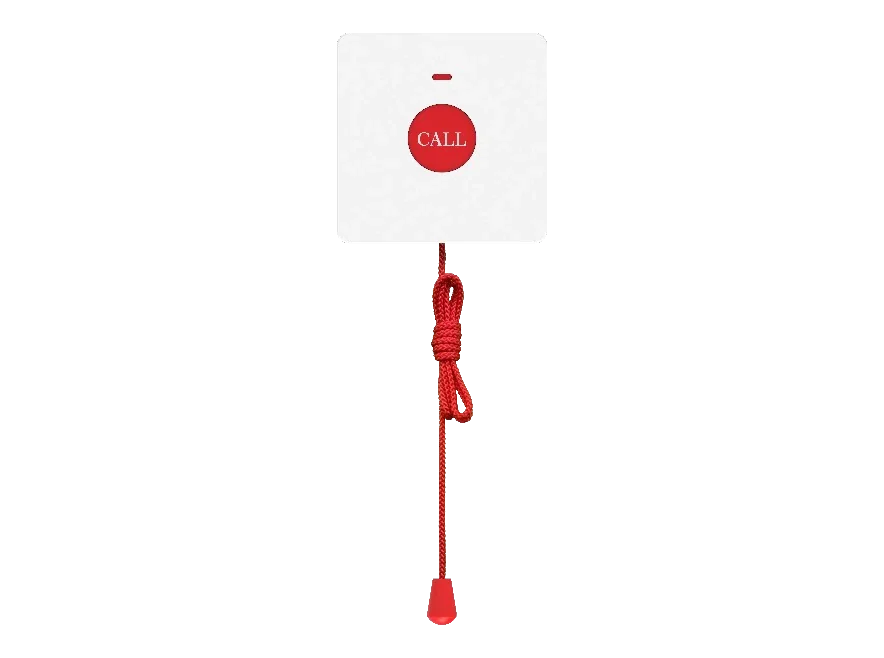
- Cleaning and disinfection protocols. Material and protection ratings are stated for several devices - IP54 on the bedside station in the product guide, IP65 on the wireless pull cord, IP44 on the wired one, IP67 on one portable handset - but no cleaning agent list or wipe frequency is documented.
- Data retention periods. Logs exist; how long they are kept on the console or exported elsewhere is not stated, so retention has to be designed into the customer's own IT policy.
- A service or repair term. The materials record no after-sales term of any kind, for any device in this range.
- Dimensions, weights and operating temperatures for most care devices: not stated, which matters where a station has to fit a specific 86 box or a wall the estates team controls.
What the ward design does state, in numbers — what should you know?
Compliance conversations get shorter when the call chain is already written down. The printed plans in the care material give a ward two reference points:
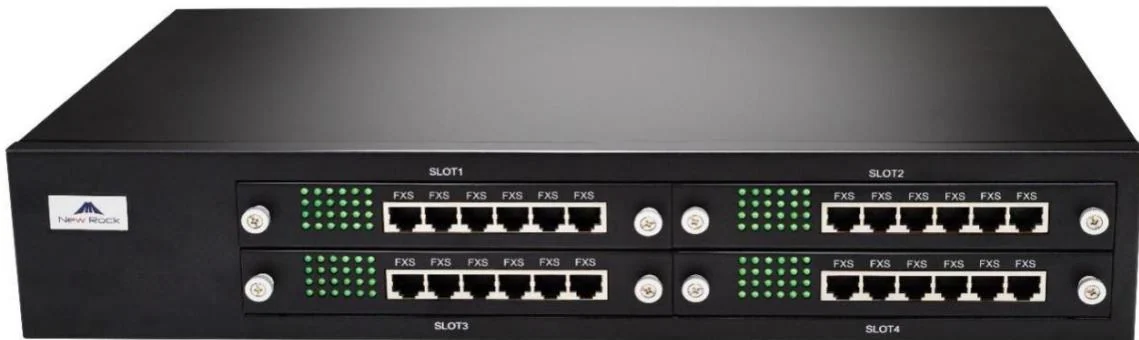
- A 50-bed clinic: 15 rooms, 50 bedside stations, 15 door-side stations, 15 bathroom pull cords, 15 corridor lights, 2 corridor displays, one console, 15 to 20 portable handsets, 100 SIP extensions on an OM80E with 216 SIP trunks.
- A 70-bed nursing home: 40 rooms, 70 bedside stations, 70 bathroom pull cords, 40 corridor lights, 4 corridor displays, one console and 20 handsets.
One console is stated to carry up to 100 devices, which is the ceiling to design against and the figure to quote in a tender response. The room-by-room method behind those numbers is set out in a separate article on this site.
The questions only your side can answer — what should you know?
- Which local code applies to the emergency call system in your jurisdiction, and whether it is the building code, the lift code, a care standard or a procurement specification. The equipment does not decide this.
- Which positions must be able to raise an emergency call - bed, door, bathroom, day room, assisted bathroom - and which must be able to receive one.
- Who answers, and what the escalation chain is when nobody is at the console. The system can transfer to a portable handset; whether that satisfies the standard is your compliance officer's call.
- Whether calls must be recorded, for how long, and what your jurisdiction requires you to tell patients, residents and staff. Recording is a legal question before it is a technical one, and it also constrains quality: recording here runs in G.711 and G.729, not wideband.
- How the nurse call system interfaces with fire, access control and the site's other alarm systems. Integration with access control and public address is stated as part of the care solution; the specific signal list is site work.
- What standby power the site will provide for the network, the PoE switches and the equipment room, since the devices themselves publish no runtime.
- Which network the care devices sit on. They are SIP endpoints on IP; whether that is a dedicated VLAN or a shared network is an estates decision, and the switch inventory should reflect it.
What to ask a supplier for
Ask for the product documentation for each model in the bill of materials, with the pages that state the call behaviour, the log behaviour, the power source and the protection rating. Ask which of your requirements are met by documented features and which are met by site design. Ask who signs the commissioning test sheet, and ask for the test list before the work starts - a system that has been tested position by position is the only defensible answer to a compliance question. And where a requirement is not documented, the correct answer from any supplier is "that is confirmed on the quotation", not a plausible guess.