Cabling and power
PoE planning for a floor of SIP phones
On this page
- Count ports before watts — what should you know?
- What the material states for each device — what should you know?
- The only published consumption figures — what should you know?
- Port speed: the detail that bites later — what should you know?
- Sizing a floor — what should you know?
- Power and the network above the phone
Count ports before watts — what should you know?
PoE planning on a telephony floor has two halves, and the first one is arithmetic rather than electrical. Count every device that will be powered from the switch, add the handsets and bases that are not, and then size the switch by ports with a spare allowance. The watts question comes second, and on this product range the honest answer is that it depends on the model - because most of the phones do not publish a PoE class at all.
That is not a reason to guess. It is a reason to count ports carefully and to confirm class on the quotation, which is how the rest of this article is framed.
What the material states for each device — what should you know?
| Device family | PoE stated | Port speed where stated |
|---|---|---|
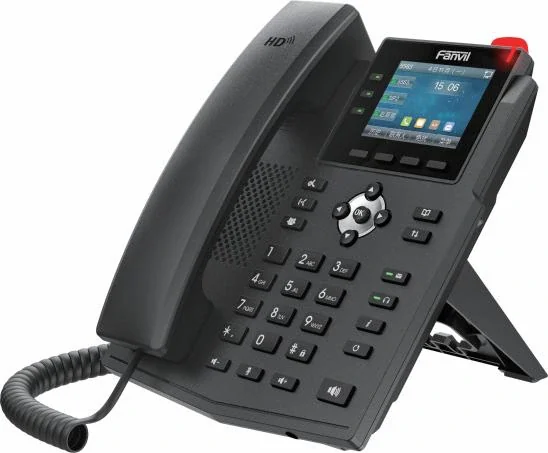
| X3U, X4U, X5U, X6U, X7A, X7C, X210, X210i, X2P | Integrated PoE; the X2P is 10/100 Mbps | Dual gigabit on most; X2P and some X300 models are megabit |
| X301 / X303 group | PoE on the P, G and W variants | Dual megabit, or dual gigabit on the G variants |
| V series (V61, V62, V63, V64, V65, V67) | PoE supported on the models that state it | Dual gigabit on most |
| Hotel range (H2U, H3W, H4W, H5W, H6W, H1) | Integrated PoE | 10/100 Mbps on the models that state a port |
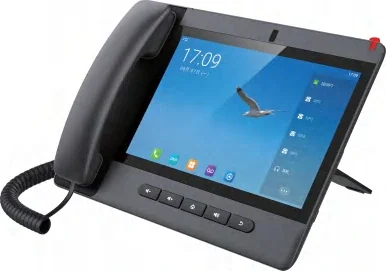
| Care consoles and big-button phones (A320i, A330i, X305) | Integrated PoE | Dual gigabit |
| DECT bases (W710D, W710H) | PoE supported | Base station |
| Wi-Fi handsets (W610W, W611W, W620W) | Not applicable - battery powered | Wireless |
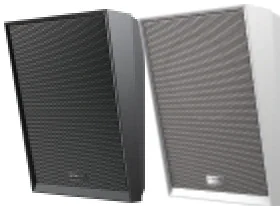
| SIP speakers (A212, A201, A233, FH-S01) | PoE; A212 states PoE 8 W and PoE+ 15 W; FH-S01 states IEEE 802.3af | 10/100 Mbps Ethernet |
| Paging gateways (PA3, PA2S) | PA3 states PoE Class 4 and 802.3at; PA2S states IEEE 802.3af; both accept 12-24 V DC | Megabit Ethernet |
Read that table with one caution: it records what the material states, not what a device might support in practice. Where a class is not stated, the class is not confirmed, and no responsible design should fill in the blank.
The only published consumption figures — what should you know?
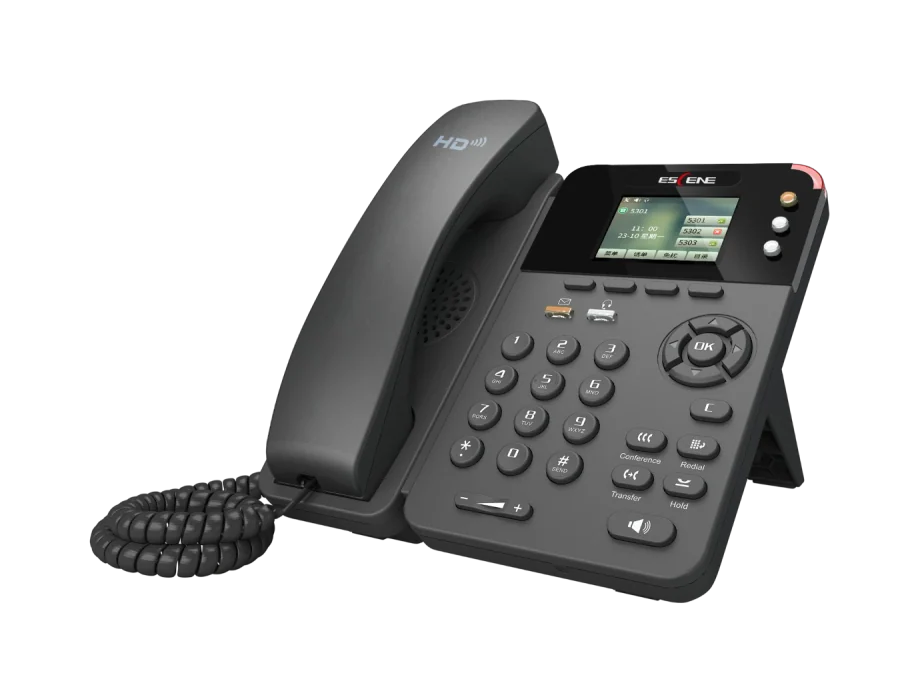
Per-device consumption is stated for three models in this range, and they are the ones to use as a sanity check on a budget: the ES282-PCG at 1.4 to 2.6 W, the WS210 at 1.4 to 2.6 W, and the ES210 at 1.5 W. All three state PoE IEEE 802.3af class 0 and can also run from a power adapter, and the WS210 and ES210 state PoE as an option rather than a standard fit.
Those figures are worth remembering for scale: a floor of 48 phones at that class of consumption is a modest load by switch standards, which is exactly why port count, not watts, is usually the binding constraint on a telephony floor. Switch power budget becomes the real question only when the floor also carries speakers, since the A212 alone can draw 15 W at PoE+ and a horn speaker is rated at 30 W output.
Port speed: the detail that bites later — what should you know?
Every phone in this range that carries a PC or a second device behind it does so through a second Ethernet port. That is why the port speed on the phone matters beyond telephony: a 10/100 Mbps phone in front of a desktop PC caps that PC at 100 Mbps, while a gigabit model does not.
- X2P: 10/100 Mbps, integrated PoE - a call-centre position where the PC port may not matter.
- X301 and X303 non-G variants: dual megabit ports.
- X303G, X301G, X3U, X4U, X5U, X6U and the consoles: dual gigabit.
- V64, V63, V62G and the V60/V50 wall phones: dual gigabit where stated.
Two rules follow: put gigabit phones where a PC sits behind the phone, and match the switch to the phones rather than buying above them. A 48-port gigabit PoE switch in front of 48 megabit phones is a waste; the reverse mix produces a support call within a month.
Sizing a floor — what should you know?
A worked example for one floor of an office: 46 desk phones, one operator console and one wall speaker, with 20 per cent spare ports.
- Ports needed: 48 powered devices, plus a spare allowance. Plan for roughly 58 ports, which is more than one switch: three 24-port units, or one 48-port plus one 24-port.
- PoE budget: the phones are PoE, the console is PoE, and the speaker should be planned at PoE+ if it has to deliver full output. Confirm the class of the phone models on your quotation before finalising the switch budget.
- Cable: structured cabling to each desk position, tested and labelled, plus a patch panel per floor. The PBX itself sits on a single IP address with its second port available for redundancy or for internal connections.
- Spare ports: count the DECT base or the wireless access point that will be added in year two. It is cheaper than a second switch.
Power and the network above the phone
PoE delivers power to the endpoint, not to the PBX, and it does not protect voice from a network failure. Where a site needs continuity, the levers are in the PBX configuration rather than in the switch: the ETH2 port can be set as a redundant link that takes over in about 1.75 seconds, a failed outbound SIP call can fall back to an analog line, and the backup SIP server can be set to a fixed address or to DNS SRV. Power backup for the equipment room and the closets - whatever form the site chooses - should be designed alongside the PoE plan, because a switch full of phones and no power is a silent building.