
Reference configuration · Hotel
120-room hotel — reference configuration
A room-by-room list for a 120-room property: 120 guest-room phones with service keys already named for wake-up calls, 60 bathroom positions, 24 staff extensions, and a PBX sized for 204 extensions with the analog ports a hotel always finds a use for.
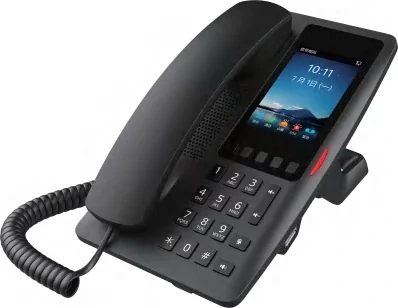
- Guest rooms: 120 × H6W with five named service keys, including wake-up call service
- Bathroom and second positions: 60 × H2U with ten speed-dial keys
- Staff and back office: 24 extensions — 10 desk phones, 2 front-desk consoles, 12 portable handsets
- PBX: OM200G — 496 SIP trunks, four card slots, one 12FXS + 12FXO card with four FXO lines wired
- Wake-up calls and room status to the property PMS are PBX functions, with no extra box
- A reference design built from published capacities — not a named installation
This is a reference design prepared from the product datasheets, not a record of a named customer installation.
Design parameters — what should you know?
- Guest rooms
- 120
- Room-side extensions
- 180 — 120 room phones and 60 bathroom phones
- Staff extensions
- 24
- Total extensions
- 204
- IP PBX
- OM200G — 496 SIP trunks, 16 GB storage
- Analog ports
- 12 FXS + 12 FXO on one card; four FXO lines wired
Equipment list for this design — what should you know?
| Item | Model | Qty | Note |
|---|---|---|---|
| IP PBX | OM200G | 1 | 496 SIP trunks, four hot-swap card slots, dual gigabit Ethernet, 16 GB storage; recording is remote only |
| Interface card | 12FXS + 12FXO | 1 | Four FXO ports wired to analog lines as an escape route; the FXS ports left for back-of-house devices |
| Guest-room phone | H6W | 120 | Five programmable service keys named for housekeeping, ticket booking, switchboard, ordering food and wake-up calls; integrated PoE; Wi-Fi 6; AP mode |
| Bathroom / second-position phone | H2U | 60 | Ten speed-dial service keys and one programmable key for door-phone control; handset and hands-free modes; integrated PoE |
| Front-desk console | V67 | 2 | Twenty SIP lines and up to 116 DSS keys for busy-lamp fields; 7-inch Android touch screen |
| Back-office desk phone | X303G | 10 | Four SIP lines, dual gigabit ports, integrated PoE — reservations, housekeeping office, engineering and F&B |
| Portable Wi-Fi handset | W611W | 12 | Duty manager and housekeeping supervisors; 2.4-inch screen, up to 16 DSS keys, one configurable PTT key |
| SIP wall speaker | A212 | 2 | Back-of-house paging dialled from reception as a normal call; up to 20 multicast zones |
| Hotel system link | PBX API + hotel module | 1 | Room status is pushed to the property PMS over the PBX API; the hotel module is the stated integration for room status and call-permission control |
| PoE access switch | Customer network hardware | 10 | 24-port PoE units covering the 192 room and bathroom phones, the 2 speakers and spare ports |
What goes in the room, and how many — what should you know?
The room phone is the guest-facing part of the system, so the service keys are the specification that matters most. The rest of the count follows from the room mix.
- The H6W and H2U take power over the network cable, so no local power supply is needed at the bedside
- H6W AP mode lets the phone act as a router for the room — the brochure presents this as reducing cost and simplifying setup
- H6W carries one USB-A port for charging a guest phone
- Both room phones support G.722 and Opus wideband audio
Room-side and staff positions in this design
| Position | Device | Qty | Why this model |
|---|---|---|---|
| Guest room | H6W | 120 | Five programmable service keys named for housekeeping, ticket booking, switchboard, food ordering and wake-up calls |
| Bathroom / second position | H2U | 60 | Ten speed-dial keys, handset and hands-free modes, wall or desk mounted |
| Reception and duty desk | V67 | 2 | 20 SIP lines and 116 DSS keys for busy-lamp fields |
| Back office | X303G | 10 | Four SIP lines and PoE, for reservations, engineering and F&B |
| Housekeeping and duty manager | W611W | 12 | Portable, up to 16 DSS keys and one PTT key |
This is a reference design prepared from the product datasheets, not a record of a named customer installation.
Wake-up calls, room status and the PMS link — what should you know?
- Wake-up calls are a system feature of the OM series, and the voice-prompt set includes a file named wakeup
- Room status is set from a room extension with a feature code, and the PBX pushes it to the hotel PMS over the API
- The hotel management docking module is the stated integration for room status and call-permission control
- The auto attendant switches between working-hours and off-hours greetings, with up to three periods a day, so the night greeting needs no manual change
- Call detail records can be pushed to an external server (default port 1809) for the property’s own call accounting
The materials do not describe the front-office screens behind these functions, so the exact wake-up and room-status workflow is confirmed on the quotation.
Trunks, escape routes and the card strategy — what should you know?
204 extensions sit well inside the OM200G’s 496 SIP trunks, which is the point of choosing this model over the OM80E: a hotel adds service extensions — lifts, alarm lines, a spa desk — for years after handover.
- Each SIP trunk supports up to 120 concurrent calls
- Four analog lines wired to FXO ports can take over when a SIP call times out or returns 4xx/5xx/6xx
- ETH2 can be set as a redundant port and takes over from ETH1 in about 1.75 seconds
- Cards are hot-swappable, so a failed card is replaced without taking the property down
- Recording on this model is remote only, and dual hot standby is not available — only the OM1000-UC pairs two units
Frequently asked questions
Can the hotel keep analog handsets in the rooms?
How are wake-up calls delivered?
Does one phone per room mean 120 extensions?
What keeps calls running when the network drops?
Explore Products
Related products
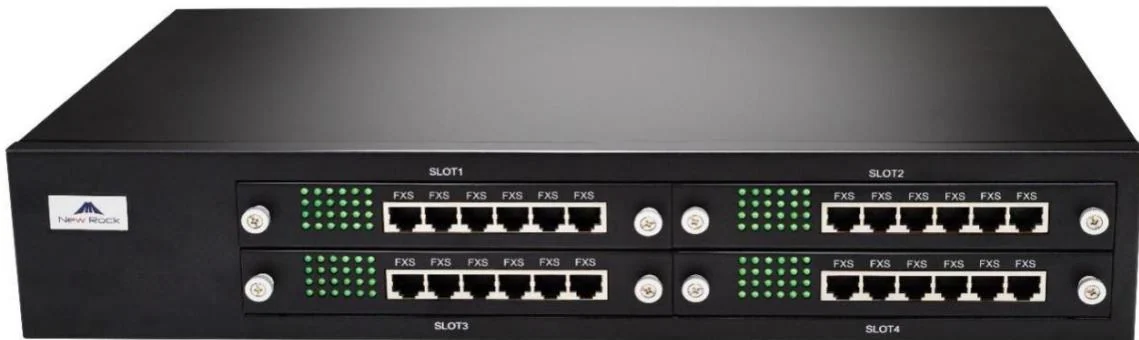
OM200G
Four hot-swap slots, 496 SIP trunks and gigabit networking.
- 4 hot-swap slots
- Up to 96 analog ports
- 496 SIP trunks
H6W
Five named service keys, Wi-Fi 6 and an AP mode that acts as a room router.
- 2 SIP lines
- 3.5-inch 320×480 screen
- Wi-Fi 6 dual band
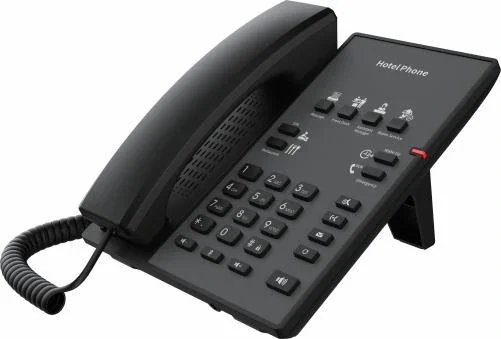
H2U
Ten service keys and door-phone control for rooms that need a fixed contact list.
- 2 SIP lines
- 10 speed-dial keys
- G.722 & Opus
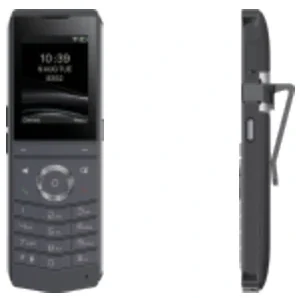
W611W
An IP67 Wi-Fi 6 handset for staff who carry a phone all shift.
- IP67 rated
- Wi-Fi 6 dual band
- 9 h talk / 200 h standby
Planning an IP telephony project?
Send us the site type, the number of extensions or rooms and the areas to cover — we will come back with a configuration and quotation.
Send the site details
Six facts build a configuration: site type, extensions or rooms, simultaneous calls, areas to cover, existing lines and the documents you already hold. Send as many as you know — nothing has to be final before the first reply.
- Reply within one working day
- Configuration + quotation for your site
- Your details are used only to answer this inquiry
Page author: NEXVIA EngineeringPublished: Last updated: