
Reference configuration · Multi-floor office
300-extension office — reference configuration
Four floors and a branch site on one dial plan: 290 desk and console phones plus ten DECT handsets, a paired OM1000-UC core with dual hot standby, and the multi-site numbering that lets a branch keep its own extension ranges without collisions.
- Extensions: 300 — 240 standard desks, 30 team desks, 12 executive, 6 meeting rooms, 2 consoles, 10 DECT handsets
- Core: two OM1000-UC units in dual hot standby, 1000 SIP trunks between them
- Trunks: 30 configured; each supports up to 200 concurrent calls
- DECT: two W710H bases carry up to 30 handsets each and 16 simultaneous calls each
- DID/DOD binds up to four outside numbers to an extension or a group
- A branch site joins the same network with repeatable numbers and a site prefix

This is a reference design prepared from the product datasheets, not a record of a named customer installation.
Design parameters — what should you know?
- Floors
- Four, plus a branch site on the same network
- Extensions
- 300
- Core
- 2 × OM1000-UC, dual hot standby
- SIP trunks
- 30 configured of 1000; up to 200 concurrent calls per trunk
- DECT
- 2 bases, 10 handsets; up to 300 handsets per system
- Numbering
- DID/DOD — up to four outside numbers per extension or group
Equipment list for this design — what should you know?
| Item | Model | Qty | Note |
|---|---|---|---|
| IP PBX core (pair) | OM1000-UC | 2 | Paired for dual hot standby; the only model in the range with system-level redundancy. Three fixed IP addresses are required: primary, secondary and a virtual IP |
| Desk phone, standard | X3U | 240 | Six SIP lines, 2.8-inch colour screen, dual gigabit ports, integrated PoE |
| Desk phone, team lead | X6U | 30 | Twenty SIP lines, 4.3-inch main screen with two 2.4-inch side screens, 60 DSS keys, five LED line keys |
| Desk phone, executive | V67 | 12 | 7-inch Android touch screen, 20 SIP lines, up to 116 DSS keys, built-in 5 MP camera |
| Meeting-room video phone | X7A + CM60 | 6 | Android 9.0 phone with the CM60 USB HD camera for 1080p calls; 112 DSS keys; integrated PoE |
| Operator console | X210i | 2 | Twenty SIP lines and 106 DSS keys with a gooseneck microphone; reception and the main switchboard |
| DECT base station | W710H | 2 | Up to 30 handsets and 16 simultaneous calls per base; up to 300 handsets and 200 simultaneous calls for the system; PoE |
| DECT handset | W610D | 10 | 2-inch colour screen, 16 DSS keys plus a side key, drop-safe from 1.8 m; for warehouse and floor staff |
| Branch-site PBX (optional) | OM50G | 1 | 62 SIP trunks; joins the network as a normal site. Keep its analog lines as a local escape route if the WAN drops |
| ATA gateway (optional) | GA10 | 2 | One FXS port and two SIP lines each — the route for a fax machine or a legacy analog phone on a SIP-only core |
| PoE access switch | Customer network hardware | 8 | 48-port units across four floors, sized to the 290 desk phones, the DECT bases and spare ports |
Why the OM1000-UC and not the OM200G — what should you know?
Both models hold 300 extensions on paper, so the decision is made by three other things: trunk headroom, redundancy and whether the site still needs analog ports.
- Any requirement for analog ports pushes you back to the OM200G, which takes up to 96 of them
- A fax on a SIP-only core needs an ATA gateway such as the GA10, or the OM200G
- Dual hot standby pairs two OM1000-UC units and requires three fixed IP addresses on the same subnet
The two candidate cores at this size
| OM1000-UC | OM200G | |
|---|---|---|
| Maximum SIP trunks | 1000 | 496 |
| Concurrent calls per trunk | 200 | 120 |
| Analog ports | None — SIP only | Up to 96 across four card slots |
| Dual hot standby | Yes — the only model that supports it | No |
| Ethernet | 4 × gigabit: WAN, AUX, EXP1, EXP2 | 2 × gigabit |
| DID/DOD | Yes, with a dedicated manual chapter | Not documented in the manual |
This is a reference design prepared from the product datasheets, not a record of a named customer installation.
Multi-site numbering for the branch — what should you know?
Multi-site networking joins PBXs over the IP network so extensions can dial short numbers across sites and share outside lines. The choice you make first is the numbering scheme.
- Unique numbering across the network: dial any extension directly, no prefix — the fit for stacked capacity or small regional networks
- Repeatable numbering with a site prefix: each site keeps its own number plan and management, which is the scheme for larger head-office and branch structures
- One site acts as the management site and must have a fixed IP address; the other sites register to it, and can use a domain name when their address is dynamic
- Site authentication is either by site IP address or by IP address and port, the latter only where the port is fixed
- Each site can share its outside lines with the others, and cross-site dialling uses a prefix format of # + prefix + site number + extension
Floor by floor: ports, power and voice — what should you know?
- 290 phones and two DECT bases need PoE ports; eight 48-port switches give the 384 ports this plan needs including spares
- Voice uses RTP ports 10010–10266 by default on the PBX — two UDP ports per call, so 128 concurrent calls occupy the whole default range
- IP extensions register on port 5060 by default; the registration port can be changed on the PBX, and every phone must be changed with it
- QoS marking on the PBX defaults to TOS/DSCP 0x0c, so the switches should trust and carry that marking
- The PBX supports 802.1X port authentication where the network enforces it
- The DECT system carries warehouse and floor staff; up to 30 handsets per base and 300 per system, with 16 simultaneous calls per base
Frequently asked questions
Is one OM1000-UC enough for 300 extensions?
How does the branch site fit in?
We still run a fax machine. Does it work here?
How does call recording work in this design?
Explore Products
Related products

OM1000-UC
Pure-SIP PBX core with 1000 trunks and hot standby.
- 1000 SIP trunks
- 4 × gigabit interfaces
- Dual hot standby
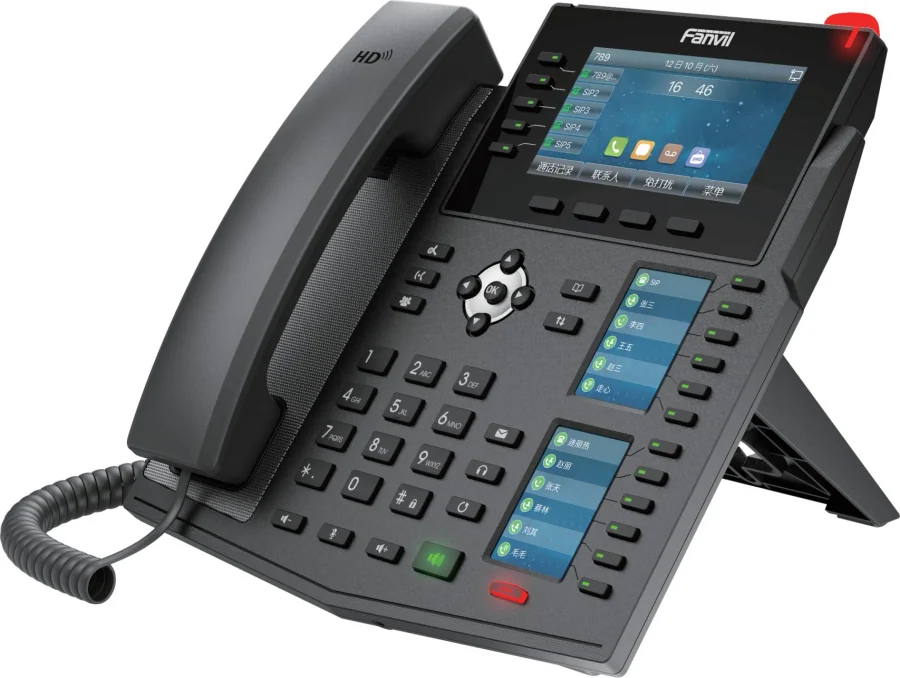
X6U
Top XU Series desk phone with three screens, 20 lines and five LED line keys.
- 20 SIP lines
- 4.3-inch + 2 side screens
- 60 DSS keys
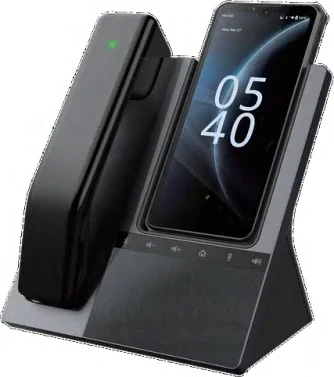
W710H
A multi-cell DECT base for whole-site coverage with seamless roaming.
- 30 handsets per base
- 16 calls per base
- 300 handsets per system
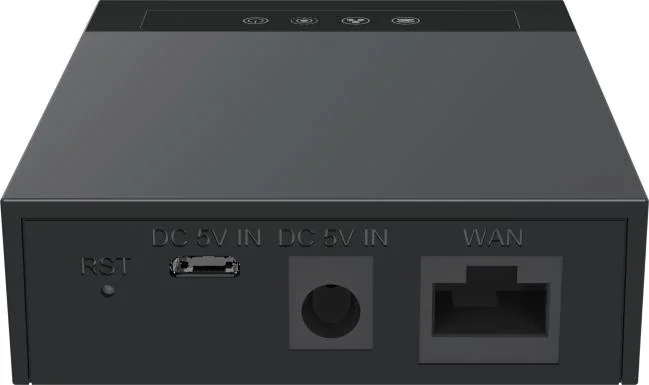
GA10
Two SIP lines and one FXS port, so an analog phone joins the IP system.
- 2 SIP lines
- 1 FXS (RJ11) port
- Micro USB DC 5V/1A
Planning an IP telephony project?
Send us the site type, the number of extensions or rooms and the areas to cover — we will come back with a configuration and quotation.
Send the site details
Six facts build a configuration: site type, extensions or rooms, simultaneous calls, areas to cover, existing lines and the documents you already hold. Send as many as you know — nothing has to be final before the first reply.
- Reply within one working day
- Configuration + quotation for your site
- Your details are used only to answer this inquiry
Page author: NEXVIA EngineeringPublished: Last updated: